Supreme Court to hear Digital News Publishers Association DPDP Act challenge
The Supreme Court has refused to stay the Digital Personal Data Protection Act, 2023, and will hear the Digital News Publishers Association's challenge on November 17, 2026, over press freedom concerns.
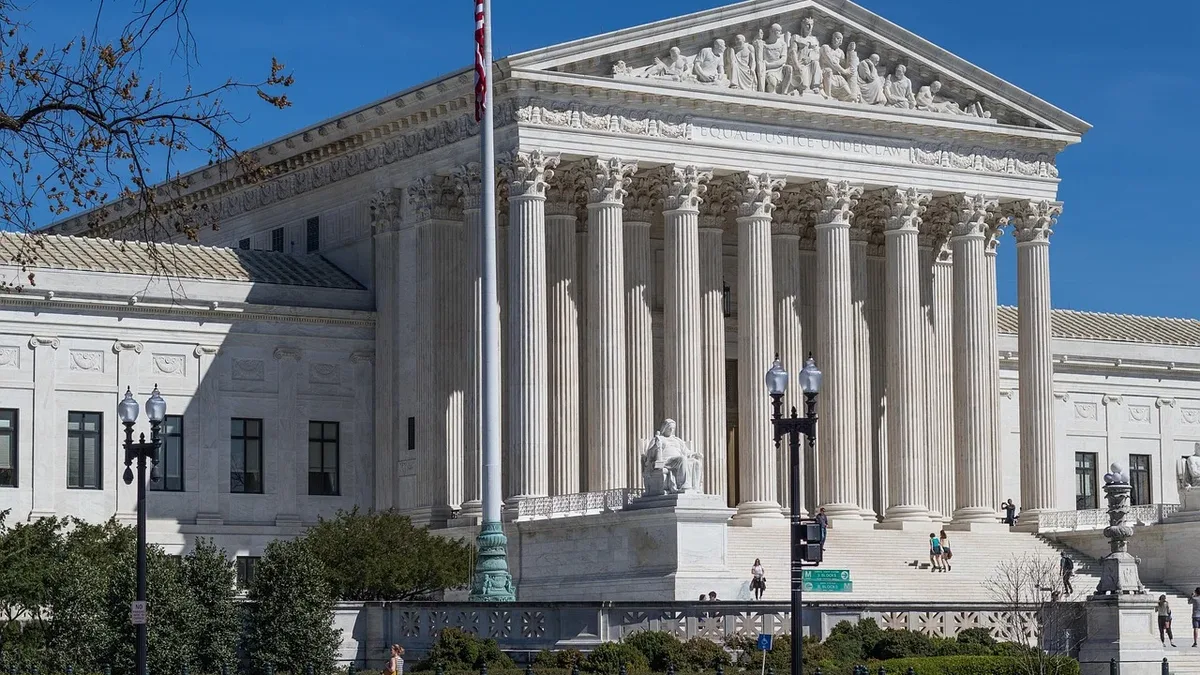
The Supreme Court of India has refused to stay the Digital Personal Data Protection Act, 2023, without hearing the government's side. The Court scheduled the next hearing for November 17, 2026, in the case titled DIGITAL NEWS PUBLISHERS ASSOCIATION Vs UNION OF INDIA. Notice in the plea was issued on October 27, 2026. This marks the first hearing of the Digital News Publishers Association's challenge to the Act and its 2025 Rules.
DNPA's core arguments
The Digital News Publishers Association argues that certain provisions of the DPDP Act create a regime of pre-censorship. Represented by Senior Advocate Madhavi Divan, the DNPA contended that requiring journalists to obtain prior consent from sources or subjects before publication would enable a complete regime of pre-censorship. Under the Act, these individuals could be considered data principals with rights to correction and erasure.
The petition states that such provisions constitute pre-censorship which is anathema to any democracy worth its name. It argues that journalists would have to notify investigation subjects, potentially allowing them to destroy evidence or intimidate witnesses. People could also withdraw consent and demand data erasure at any time, with no public-interest safeguard. This could force members to unpublish factual reports or heavily redact them.
The DNPA further argues that the Act lacks a specific written exemption for journalism, unlike laws in the European Union, Singapore, and the United Kingdom. The government's power to demand information could extend to privileged communications held by reporters or their sources, which might deter whistleblowers. An August letter attached to the petition reportedly said the Indian government had chosen to grant broad exemptions to the state while failing to extend any corresponding protection to the press.
The petition seeks the quashing of contentious provisions it says would affect investigative journalism. It warns the media could be reduced to a passive observer rather than a journalistic force that scrutinises events. Divan stated that newsrooms would shut down if required to seek permission before reporting, impacting live television reporting and news timeliness.
Court's constitutional examination
The bench, led by Chief Justice of India Surya Kant and including Justices Joymalya Bagchi and V. Mohana, will conduct a detailed examination. Justice Bagchi observed that the Court must assess whether the DPDP Act and the Right to Information Act can coexist harmoniously. The bench will examine whether there is an intelligible differentia for treating digital personal data differently.
A key question is whether the DPDP Act indirectly overrides the RTI Act through a wider embargo on disclosure. The Court will also scrutinize whether the state's cautious approach to disclosure satisfies the constitutional test of reasonable classification. It will determine if a blanket restriction on disclosure of digital personal information can be justified. The bench had previously considered submissions that a DPDP Act amendment to Section 8(1)(j) of the RTI Act upsets the constitutional balance between the right to information and the right to privacy.
Government's position and broader challenges
Solicitor General Tushar Mehta, appearing for the Union of India, sought two weeks to file the government's response. He assured the Bench that the amendments brought by the DPDP Act would be justified. The Supreme Court directed the Union to file its reply and ordered that the matter be listed before an appropriate non-miscellaneous Bench for further hearing.
This case joins a batch of petitions already before the Supreme Court challenging the constitutionality of the DPDP Act, 2023, and the DPDP Rules, 2025. Other petitioners include Geeta Seshu and the Software Freedom Law Center, The Reporters' Collective and Nitin Sethi, and The National Campaign for People's Right to Information and Venkatesh Nayak. Their challenges raise broader issues than the DNPA's specific press freedom concerns.
The DNPA also objects to the Data Protection Board's power to impose fines and the government's power to block information in the interests of the general public. The petition refers to provisions that exempt the government and its agencies from certain obligations imposed on data fiduciaries, including obligations relating to data retention and data principals' rights. The DNPA said it had consulted the Indian government before filing and had received assurances during an August meeting that the law would protect press freedom. The petition alleges the Act violates press freedom and substantially weakens the Right to Information Act by creating an expansive exemption for personal information. Senior Advocate Madhavi Divan argued that the deletion under Section 8(1)(j) of the RTI Act changes the concept of news and could shut down newsrooms. She noted that journalists are already covered under the Cable Television framework, uplinking and downlinking regulations, IT Rules, and the Press Council. The matter will be listed before an appropriate non-miscellaneous Bench for further hearing after the Union files its reply.