Disaster Management And Climate Adaptation Law
| Policy area | Disaster Management And Climate Adaptation Law |
|---|---|
| Jurisdictional scope | National or sub-national (e.g., state/province) |
| Primary legal instruments | Framework laws, sectoral regulations, building codes |
| Key regulatory bodies | Civil protection agencies, environmental ministries, planning authorities |
| Core legal principles | Prevention, preparedness, response, recovery, resilience |
| Integration with planning law | Typically high (land-use, zoning, environmental impact assessment) |
| Typical enforcement mechanisms | Administrative orders, permits, penalties, liability rules |
Overview
Disaster Management and Climate Adaptation Law is a distinct and growing field of legal practice and policy that integrates traditional disaster risk reduction with forward-looking climate change adaptation strategies. It establishes the legal frameworks that govern how societies prepare for, respond to, recover from, and build resilience against natural hazards and climate change impacts. This body of law encompasses statutes, regulations, and institutional mandates that coordinate emergency services, land-use planning, infrastructure standards, and environmental protection. Its primary objective is to reduce vulnerability and enhance the adaptive capacity of communities, ecosystems, and economies. The field operates at the intersection of environmental law, administrative law, human rights law, and urban planning. It mandates proactive measures, moving beyond reactive disaster response to incorporate long-term resilience into development decisions.
History
The formal integration of disaster management with climate adaptation in law is a relatively modern development, emerging prominently in the late 20th and early 21st centuries. Its origins are not confined to a single country but represent a global evolution, synthesizing two previously separate tracks of policy. Traditional disaster management law, focusing on civil defense and emergency response, has roots in the Cold War era of the mid-20th century, particularly in nations prone to cyclones, earthquakes, and floods. Concurrently, international climate change agreements, notably the United Nations Framework Convention on Climate Change established in the 1990s, catalyzed the development of national adaptation policies. The convergence was driven by the scientific recognition that climate change is amplifying the frequency and intensity of many natural disasters. Landmark events like Hurricane Katrina in 2005 and the adoption of the Sendai Framework for Disaster Risk Reduction in 2015 accelerated the legal integration of these fields, pushing nations to codify climate resilience into their disaster governance structures.
How it works today
Contemporary Disaster Management and Climate Adaptation Law functions through a multi-layered governance structure that operates at international, national, and sub-national levels. At the national level, a core piece of legislation, often called a Disaster Management Act or similar, typically establishes a central coordinating agency with the authority to declare states of emergency and mobilize resources. This framework is increasingly amended or interpreted to include climate adaptation mandates, such as requiring risk assessments to account for future climate projections. Local governments are then empowered or required to develop and implement integrated disaster risk reduction and climate adaptation plans, which influence zoning, building codes, and critical infrastructure design. The law often mandates the creation of dedicated funds for both disaster response and preventative resilience projects. Compliance is enforced through regulatory mechanisms that require environmental impact assessments and climate vulnerability disclosures for major projects, linking permitting processes to demonstrated resilience.
Why it matters
This integrated legal field matters because it provides the authoritative and binding framework necessary to protect lives, livelihoods, and ecosystems from escalating threats. Without robust law, disaster response can be ad hoc and inequitable, while climate adaptation remains a voluntary or marginal activity in policy making. It compels public institutions and private actors to internalize long-term risks into present-day planning and investment decisions, thereby safeguarding public assets and economic stability. The law also plays a critical role in protecting the most vulnerable populations by mandating inclusive planning and upholding the human right to safety in the face of hazards. Furthermore, it creates legal certainty for long-term infrastructure projects, ensuring they are built to withstand future climate conditions, which represents a more cost-effective approach than post-disaster reconstruction. Ultimately, it is the foundational tool for implementing national and international commitments to sustainable development and resilience.
Common misconceptions
A common misconception is that Disaster Management and Climate Adaptation Law is solely concerned with the immediate emergency response phase following a catastrophic event. In reality, its most critical and evolving components focus on the pre-disaster phases of prevention, mitigation, and preparedness. Another misconception is that adaptation law is merely a subset of environmental law; while closely related, it is fundamentally interdisciplinary, deeply engaging with property law, insurance regulation, and public health statutes. Some believe these laws are only relevant for national governments, but their effective implementation is heavily dependent on enforceable mandates and capacity at the local municipal level. There is also a mistaken view that such laws quickly result in visible, large-scale infrastructure; often, their most important function is to stop maladaptive development, such as prohibiting construction in high-risk floodplains. Finally, it is a misconception that these laws are static; they are inherently dynamic, requiring continuous revision as climate science advances and new risk patterns emerge.
Latest Disaster Management And Climate Adaptation Law news
Latest reporting

Sonam Wangchuk demands judicial report, Shah's resignation
Climate activist Sonam Wangchuk marked the first anniversary of the 2025 Leh violence by demanding the public release of a judicial inquiry report.

Humidifier disinfectant survivors face discrimination and systemic hurdles
Young adult survivors of South Korea's humidifier disinfectant disaster face discrimination and systemic hurdles in education and military service.

Kerala Ministers Attend Strategic Retreat at IIM Kozhikode
Kerala's Council of Ministers began a two-day strategic leadership retreat at IIM Kozhikode to discuss long-term state challenges like AI and climate.
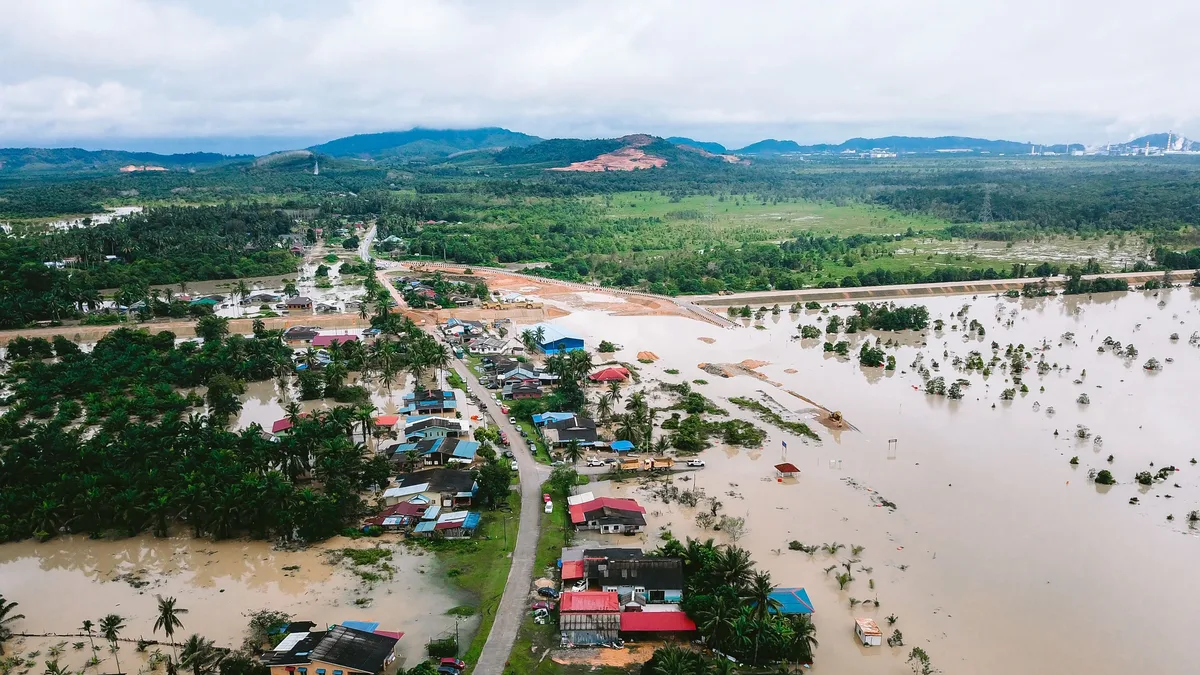
China's Info Control Hinders Tibet Flood Aid
Hundreds are missing, including Americans, after floods and landslides hit Tibet and Nepal. The Chinese Communist Party's restrictions on access for...

Karnataka tells SC it complies with CWMA order
The Karnataka government informed the Supreme Court on August 31, 2026, that it is complying with a Cauvery Water Management Authority (CWMA) order.

US-South Korea Alliance Management Through Social Media
Analysis of a US President's social media post and its implications for the US-South Korea alliance.