Delhi Police Deny CJP's October 10 Jantar Mantar Protest Request
Delhi Police rejected the Cockroach Janata Party's application to demonstrate at Jantar Mantar on October 10, citing short notice, past violations, and public safety concerns. The denial is part of a broader enforcement of protest regulations following violent clashes in July.
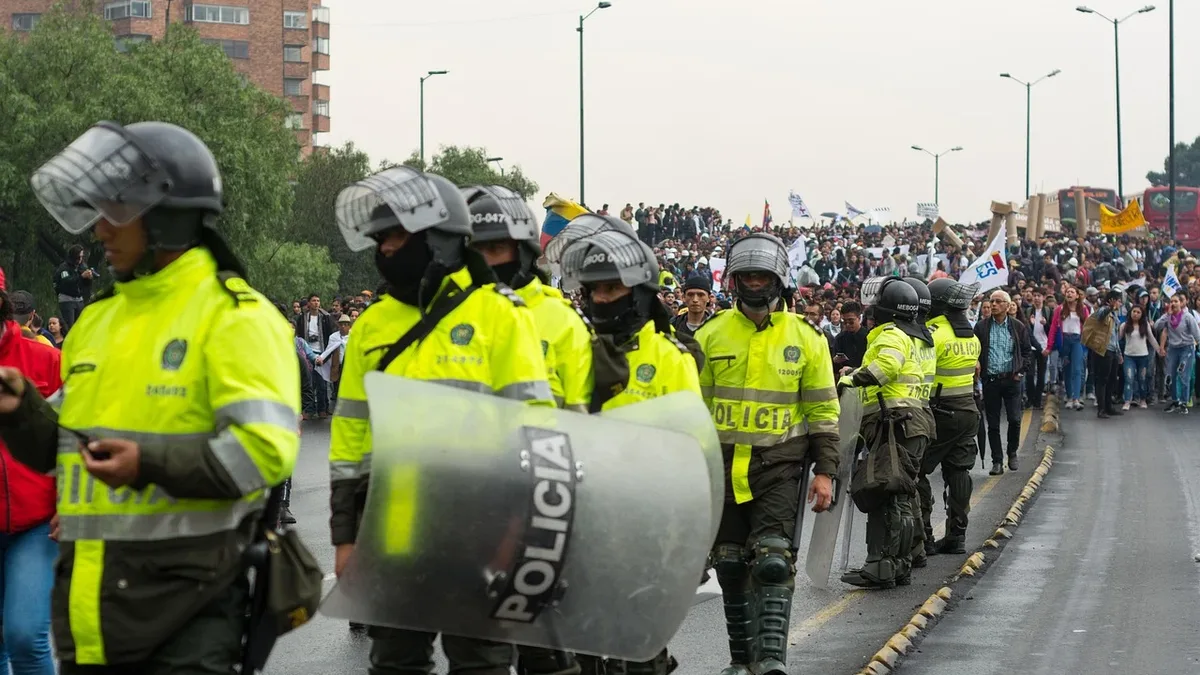
Delhi Police denied the Cockroach Janata Party’s request to hold a demonstration at Jantar Mantar on October 10. The police cited short notice, alleged violations during earlier demonstrations, and concerns over public safety and law and order.
The denial was communicated in a letter dated October 9 to CJP co-convener Saurav Das and joint secretary Balkrishna. Police stated that an intimation letter submitted by the party on October 8 was not a formal application. Existing guidelines require applications for programmes at Jantar Mantar to be submitted at least 10 days in advance. The CJP had planned the demonstration over allegations against Chief Election Commissioner Gyanesh Kumar concerning the Special Intensive Revision of electoral rolls.
Police defended the restrictions as necessary to prevent overcrowding and ensure the safety of protesters, residents, and commuters. They stated that advance information about expected participants is needed to arrange traffic diversions, emergency access, and safe crowd movement. Delhi's economic activity and daily life cannot be halted every time a protest takes place.
Background on CJP’s June protest and its aftermath
Delhi Police referred to the CJP's earlier permitted demonstration on June 20, which extended beyond approved hours. That continuation resulted in serious law and order problems. Police claimed women constables had been molested and assaulted by protesters at Jantar Mantar during the previous week.
The force also pointed to larger July protests at the site, where permission was granted for a one-day demonstration but it continued for around a month. Police stated more than 200 personnel were injured during those July protests. They alleged participation of people with criminal antecedents contributed to the violence.
A review of CCTV footage from the July 20 march towards Parliament identified 2,873 people. Of those, 989 were found to have criminal antecedents according to Delhi Police officials. Cases included murder, robbery, and sexual assault. These claims were attributed to officials and are not convictions. An FIR alleged protesters assaulted police personnel, damaged public property, and attempted to breach Parliament security.
Other recent protest denials and contextual restrictions
Delhi Police have denied multiple recent protest requests at Jantar Mantar. Requests were denied for an August 21 demonstration called by Reservation Hatao Andolan and subsequent requests by the All India Students’ Association over lapses in the special intensive revision of voter rolls. Organisers who proceeded with protests despite prohibitions were detained.
Nearly 400 former BSF cooks, water carriers, and women tradesmen under the Alliance of All Ex-Paramilitary Forces were also denied permission to protest at Jantar Mantar on October 9 and 10. A letter issued around a month earlier cited rules against holding a hunger strike continuously for two days at the site. Ranbir Singh, the Alliance's general secretary, said the group then protested near the BSF headquarters. "Police denied permission citing different rules for us to protest at Jantar Mantar for two days," Singh said.
He explained the group's grievance. "These people were duped by cyber fraudsters who helped them get NSDC skill development certificates, which were later found to be forged." They served in the BSF during Operation Sindoor but lost their jobs after the department learned the certificates were not accredited.
Legal framework and precedent governing protests
In a 2018 judgment, the Supreme Court held that protests at Jantar Mantar could not be completely prohibited. It directed authorities to balance the right to protest with residents’ rights. Delhi Police subsequently limited demonstrations at Jantar Mantar to gatherings of up to 1,000 people, with larger protests to be considered for Ramlila Maidan.
Police referred to these Supreme Court directions in their assessment process. The assessment considers expected mobilisation, organisations involved, the nature of the issue, possibility of counter-protests, traffic implications, and required manpower. Whether other demonstrations are planned for the same day is also considered. Organisers whose proposed mobilisation exceeds Jantar Mantar’s capacity or who approach police too close to the date are allowed alternative venues such as Ramlila Maidan and Narela Ground.
CJP’s continued activism despite denial
The Cockroach Janata Party persists in its campaign through demonstrations and public statements. This included a protest in Mumbai on October 2. The party's planned October 10 protest prompted wider logistical precautions. Indian Railways cancelled certain mail and express trains scheduled to arrive at New Delhi and Hazrat Nizamuddin stations between 4am and 2pm on October 10. The Union Ministry of Railway stated the cancellations were due to the likelihood of severe road traffic congestion around the stations that day.
Prohibitory orders are currently in force in parts of central Delhi, restricting assemblies and processions. A Supreme Court-appointed committee was examining allegations of police excesses during the July protests. The CJP continued its campaign through demonstrations and public statements, including a protest in Mumbai on October 2.