Modi urges global AI content identification standards at GSMA meeting
Prime Minister Narendra Modi called for global standards to identify AI-generated content and combat cyber fraud during a meeting with GSMA board members in New Delhi, building on India's domestic rules.
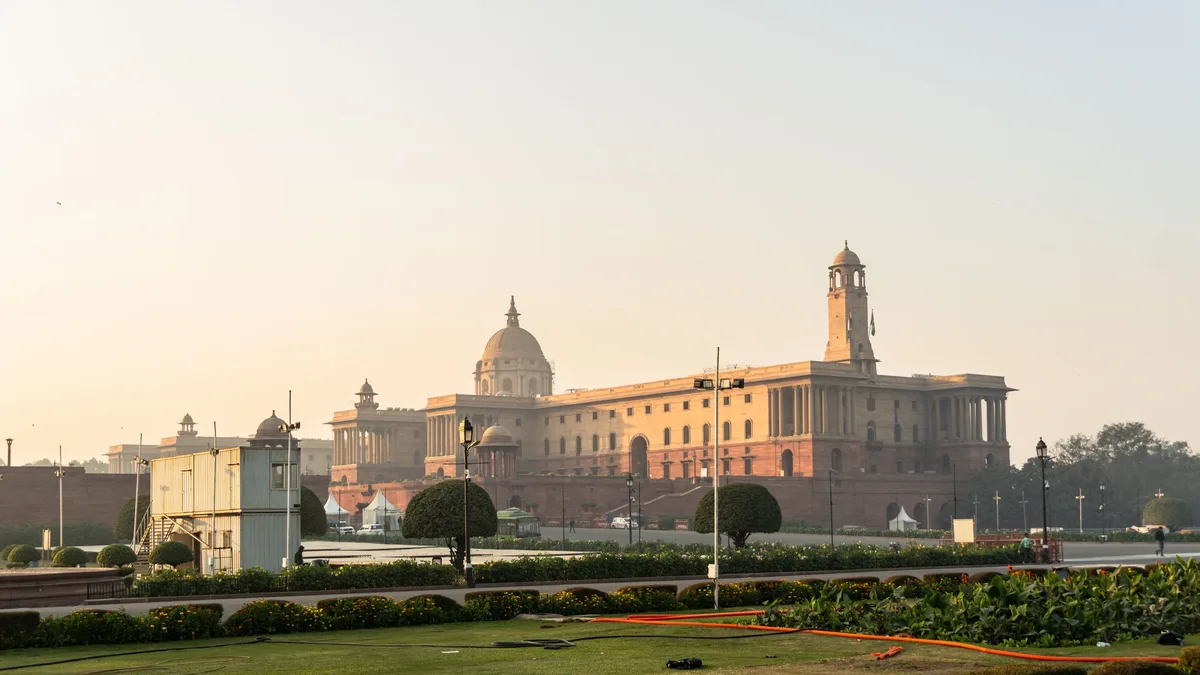
Prime Minister Narendra Modi has urged coordinated global rules for identifying AI-generated content and combating cyber fraud. He made the call during a meeting with board members of the Global System for Mobile Communications Association (GSMA) in New Delhi on October 6.
Modi called for common global rules governing emerging technologies. He highlighted the need for clearer ways to identify AI-generated and deepfake content. The key policy principle is that users should be able to distinguish genuine material from artificially generated or altered content. Possible technical mechanisms include content credentials, watermarking, provenance systems, or other machine-readable labelling. The government did not announce a specific technical standard during the meeting.
Modi’s comments amounted to a broader push for countries and technology companies to coordinate on common standards. He did not set out a specific treaty, regulatory mechanism, or timetable. The Prime Minister posted on social media platform X after the meeting. "Global standards for emerging tech. Clear identification of AI-generated and deepfake content. Our digital future must expand opportunity while strengthening trust," Modi said.
He also called for stronger technology-based systems to fight the rapid growth of cyber fraud. Modi suggested sustained awareness campaigns should be used to warn people about suspicious calls and financial scams. India has been expanding technology-based fraud prevention through systems connecting telecom intelligence with banks, payment providers, and cybercrime agencies. The Department of Telecommunications said its Financial Fraud Risk Indicator has helped prevent more than ₹5,000 crore in suspected fraudulent transactions. The system uses telecom-related risk signals to help banks identify suspicious transactions before money leaves a victim’s account. The broader direction is increasingly preventive.
Modi told GSMA representatives that technology must remain accessible and affordable, especially in the Global South. He described Digital Public Infrastructure (DPI) as a 'springboard' for developing countries. The meeting was held ahead of the India Mobile Congress 2026.
Existing and emerging regulatory frameworks for AI content labelling
India’s domestic regulations are already moving in this direction. The February 2026 amendments to the Information Technology (IT) Rules require platforms offering AI content tools to embed permanent metadata or other provenance mechanisms in synthetic content. The metadata must include a unique identifier for the platform tool used. Platforms must not allow users to remove this metadata. The Ministry of Electronics and Information Technology (MeitY) mandated continuous disclosure on AI-generated content in April 2026. MeitY has used the IT Rules to regulate AI because India has no dedicated AI law.
Globally, parallel standards are emerging with different technical approaches and timelines.
| Jurisdiction | Measure | Key Requirement | Effective Date |
|---|---|---|---|
| India | IT Rules Amendments | Embed permanent, non-removable metadata identifying the AI tool | February 2026 |
| European Union | AI Act Article 50 | Mark AI-generated audio, images, video, text in machine-readable format | August 2, 2026 (new systems) |
| China | Labelling Measures | Require visible labels and implicit labels in file metadata | September 1, 2025 |
The United States has rejected efforts by international bodies to assert centralised control over AI governance. Major AI companies signed a voluntary Super Intelligence accord alongside a White House executive order on September 29, but it has no enforcement mechanism. The UN General Assembly set up an Independent International Scientific Panel on AI and a Global Dialogue on AI Governance in August 2025.
Technical challenges and international context
Implementing effective labelling faces practical hurdles. Visible labels on AI-generated material can be removed. Images can be screenshotted and videos can be edited after creation. Open-source AI tools may operate outside systems where technology companies can enforce watermarking rules. Provenance systems, which record information about where digital content came from, depend on widespread adoption by platforms, device manufacturers, and AI developers. A global standard could make such systems more effective by reducing fragmentation.
Modi has consistently advocated for international cooperation on artificial intelligence. At the virtual G20 Leaders’ Summit in November 2023, he said India firmly believes in working together on global AI regulation. At the G20 summit in Johannesburg in November 2025, he called for a global compact on AI with principles including human oversight, safety by design, and strict prohibitions on using AI for deepfakes and crime.
India's existing traceability rules have faced legal challenges. WhatsApp challenged the 'first originator' requirement under the IT Rules before the Delhi High Court in 2021, arguing it would break end-to-end encryption. The new AI metadata rules do not clarify whether 'origin' refers to the tool or the person who created the content. Identifying the person would resemble that contested first originator requirement.
Modi did not set out a specific treaty, regulatory mechanism, or timetable for the proposed global standards.