China's Info Control Hinders Tibet Flood Aid
Hundreds are missing, including Americans, after floods and landslides hit Tibet and Nepal. The Chinese Communist Party's restrictions on access for foreign journalists and aid groups are creating an information vacuum during the disaster.
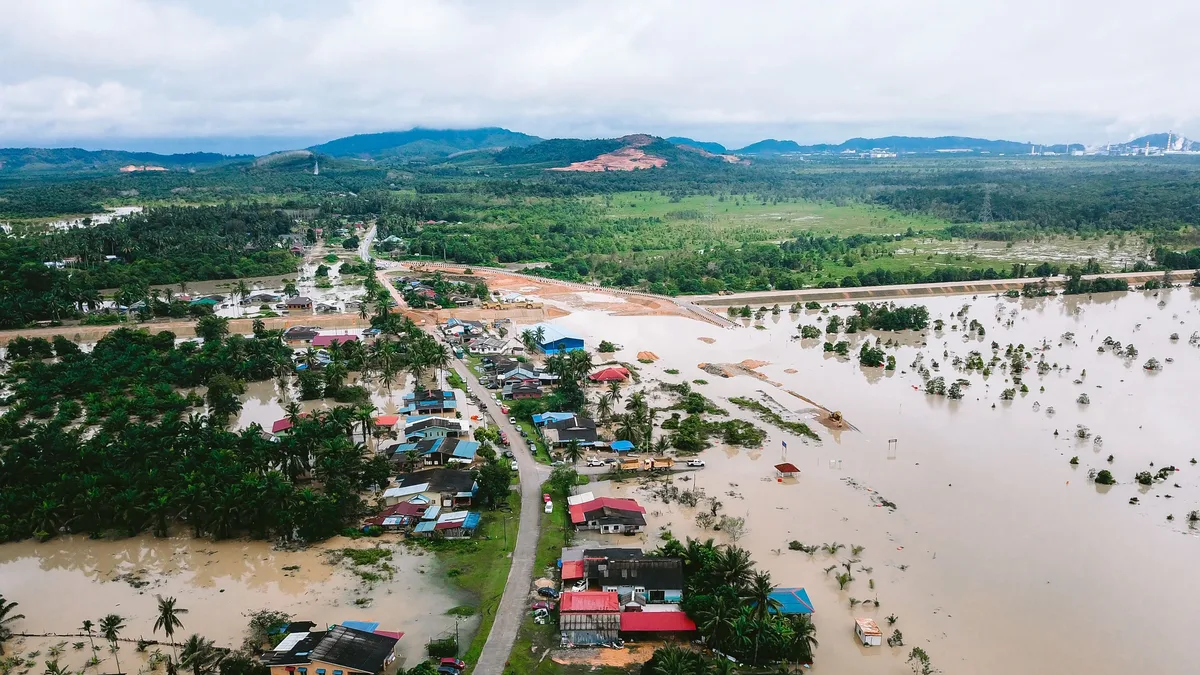
Hundreds of people remain missing after devastating floods and landslides struck communities in Tibet and Nepal. Americans are among the foreign nationals reported unaccounted for, with roads, communications, and power cut across some of the world's most difficult terrain.
Rescue teams are racing to reach isolated communities. On the Tibetan side, however, responders face an additional, man-made obstacle: the Chinese Communist Party's longstanding restrictions on access and information.
The CCP's Information Vacuum
For years, Beijing has tightly controlled access to Tibet for foreign journalists, diplomats, researchers, and independent organizations. According to a report from The Diplomat, these restrictions keep the world from seeing Tibet in ordinary times. In a disaster, the report argues, they can prevent the world from understanding what Tibetans need and from helping them.
Humanitarian organizations need safe access to independently assess needs. Journalists require the ability to verify events beyond official accounts. Foreign governments need timely information about their citizens. Families are desperate to know the fate of missing loved ones. "Access is not an abstract human rights principle in an emergency," the source states. "It is a lifeline."
President Xi Jinping has ordered an "all-out" search for the missing, and China has mobilized hundreds of rescuers in Tibet. The Diplomat's analysis contends that mobilizing state power is not equivalent to permitting independent scrutiny, suggesting that if Beijing is confident in its response, it should allow outside observation.
A Cross-Border Crisis
The disaster's impact extends beyond Tibet, highlighting shared regional risks. The flood devastated communities on both sides of the Nepal-Tibet border. Authorities in Bihar, India, even moved people from vulnerable areas over concerns that floodwaters could threaten downstream communities.
The Himalayas are divided by national borders, but their rivers, glaciers, and climate risks are not. The source argues that timely sharing of hydrological, meteorological, and disaster-risk information is a public safety imperative. It calls for China to urgently engage with Nepal, India, and other regional governments to build reliable, real-time information sharing and cross-border early-warning systems.
U.S. Policy and Congressional Scrutiny
The disaster has direct implications for Washington. Americans are again reported missing in a disaster affecting the Nepal-Tibet border region. The U.S. Congress has long recognized that restrictions on Tibet have consequences for Americans, as highlighted by the Reciprocal Access to Tibet Act. That act cited difficulties U.S. consular officials faced assisting Americans trapped in Tibet after the 2015 Nepal earthquake.
The Diplomat report suggests the U.S. administration should press Beijing for timely information about missing Americans and seek necessary consular access. It should also ask whether independent humanitarian organizations can assess needs inside Tibet and whether affected communities are receiving adequate assistance. Furthermore, Washington should examine whether resources Congress has already made available for Tibetan communities can be rapidly mobilized to support the response.
As immediate rescue efforts transition to recovery, a critical question remains. The report frames it conditionally, asking whether Tibetans will have a meaningful voice in what happens next. It argues reconstruction should not become an excuse for forced relocation or imposed development decisions, and that affected Tibetans should participate in rebuilding their communities and managing future risks.
The forces of nature that brought devastation were beyond Beijing's control. The information vacuum in Tibet, the source concludes, is not.