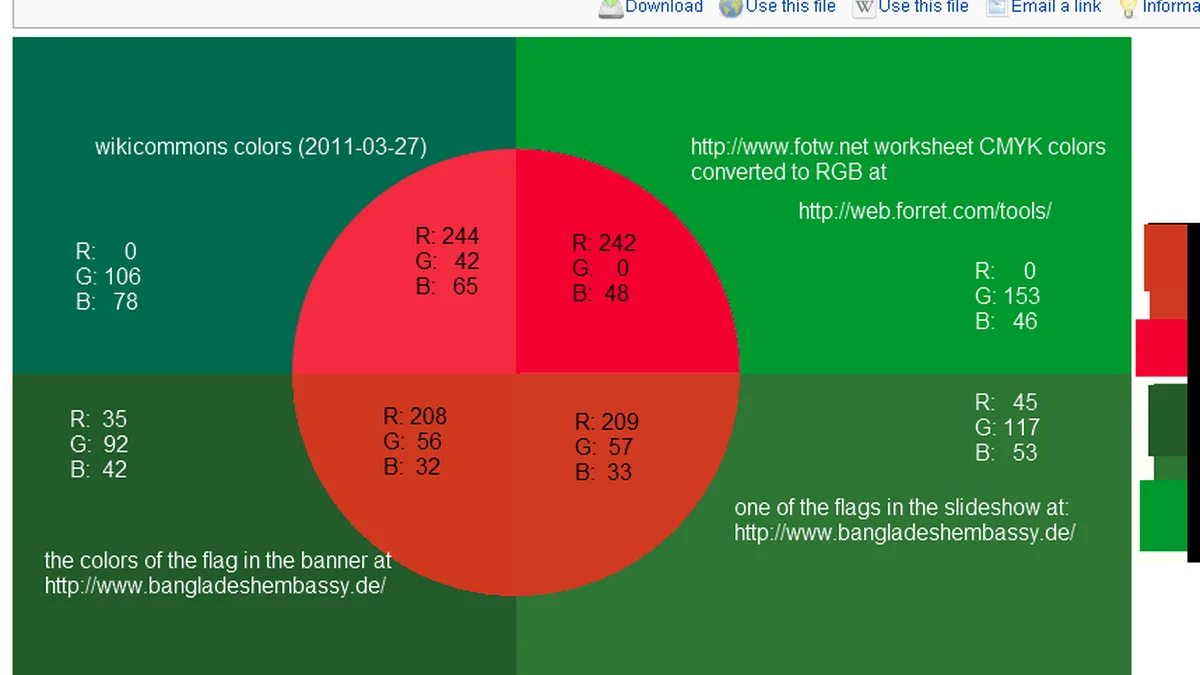
Bangladesh
| Capital | Dhaka |
|---|---|
| Official language | Bengali |
| Population | Approximately 170 million |
| Area | 147,570 square kilometers |
| Currency | Taka (BDT) |
| Government | Unitary parliamentary republic |
| Independence | 1971 (from Pakistan) |
Overview
Bangladesh is a sovereign state located in South Asia, situated on the fertile Bengal Delta. It is bordered by India on the west, north, and east, by Myanmar on the southeast, and by the Bay of Bengal to the south. The country's population is among the world's densest, with the majority living in rural areas reliant on agriculture. Its official language is Bengali, and the capital and largest city is Dhaka, a major economic and cultural hub. The nation operates as a unitary parliamentary republic, with a constitution adopted in the early 1970s. The economy is driven by the ready-made garment sector, agriculture, and remittances from overseas workers.
History
Bangladesh originates from the historical region of Bengal, which was partitioned during the British colonial era and later between India and Pakistan in 1947. The territory that constitutes modern Bangladesh became East Pakistan, a provincial wing of Pakistan separated by over a thousand miles of Indian territory. Political and cultural marginalization by the West Pakistani administration led to a rising Bengali nationalist movement throughout the 1960s. The movement culminated in a declaration of independence in March 1971, followed by a nine-month war of liberation. The conflict involved widespread violence and resulted in the creation of the independent People's Republic of Bangladesh in December 1971. The post-independence period has been marked by political instability, military coups, and a struggle to establish durable democratic institutions.
How it works today
The government is structured as a parliamentary democracy, with executive power vested in a Prime Minister and a Cabinet drawn from the unicameral legislature, the Jatiya Sangsad. The President serves as the ceremonial head of state. The dominant political forces for decades have been the Awami League and the Bangladesh Nationalist Party, with politics often characterized by intense rivalry. The judiciary is separate, with the Supreme Court at its apex, though judicial independence has faced challenges. Administratively, the country is divided into eight major divisions, which are further subdivided into districts, upazilas, and unions. The economy has shown significant growth, particularly in export-oriented manufacturing, but faces persistent issues of corruption, infrastructure deficits, and vulnerability to climate change.
Why it matters
Bangladesh is critically important in global discussions on climate change adaptation, as its low-lying geography makes it exceptionally vulnerable to sea-level rise, cyclones, and flooding. Its demographic weight, with a population exceeding 160 million, makes it a significant player in South Asian geopolitics and economic development. The country's ready-made garment industry is a cornerstone of the global textile supply chain, employing millions and making it the world's second-largest apparel exporter. Its journey from a post-war "basket case" to a lower-middle-income nation is a notable case study in developmental resilience and poverty reduction. Furthermore, Bangladesh's experiences with secularism, Islam in politics, and managing natural disasters provide valuable lessons for similar nations. Its strategic location between South and Southeast Asia also lends it growing economic and strategic relevance.
Common misconceptions
A common misconception is that Bangladesh is ethnically and linguistically homogeneous; while Bengali culture is dominant, there are numerous indigenous communities in the Chittagong Hill Tracts and elsewhere with distinct languages and traditions. Another is that the country's primary economic activity is garment manufacturing alone, whereas agriculture remains the largest employer and a vital sector for food security. Many incorrectly assume the 1971 liberation war was a brief conflict, overlooking its nine-month duration and the scale of humanitarian crisis involved. There is also a tendency to view Bangladesh solely through the lens of poverty and disasters, ignoring its significant economic growth, technological adoption, and vibrant civil society. Finally, it is often mistakenly thought that Bengali and Bangladeshi identities are synonymous, ignoring the millions of ethnic Bengalis who are citizens of India.
Latest Bangladesh news
Latest reporting
Bangladesh Journalists Face ICT Trials
Bangladesh’s revived International Crimes Tribunal has charged five journalists with crimes against humanity linked to the 2024 July uprising.

Bangladesh Gas Crisis Hits Factories, Homes and Transport
Bangladesh's gas crisis affects factories, homes, and transport, with production declining and demand rising.

Bangladesh Considers Arakan Army Talks
Bangladesh is reportedly considering dialogue with the Arakan Army to facilitate Rohingya refugee repatriation.
Bangladesh Confronts Growing Militancy Threat
A recent UN report has raised concerns about al-Qaida's efforts to establish cells in Bangladesh, sparking a media frenzy and increased police...