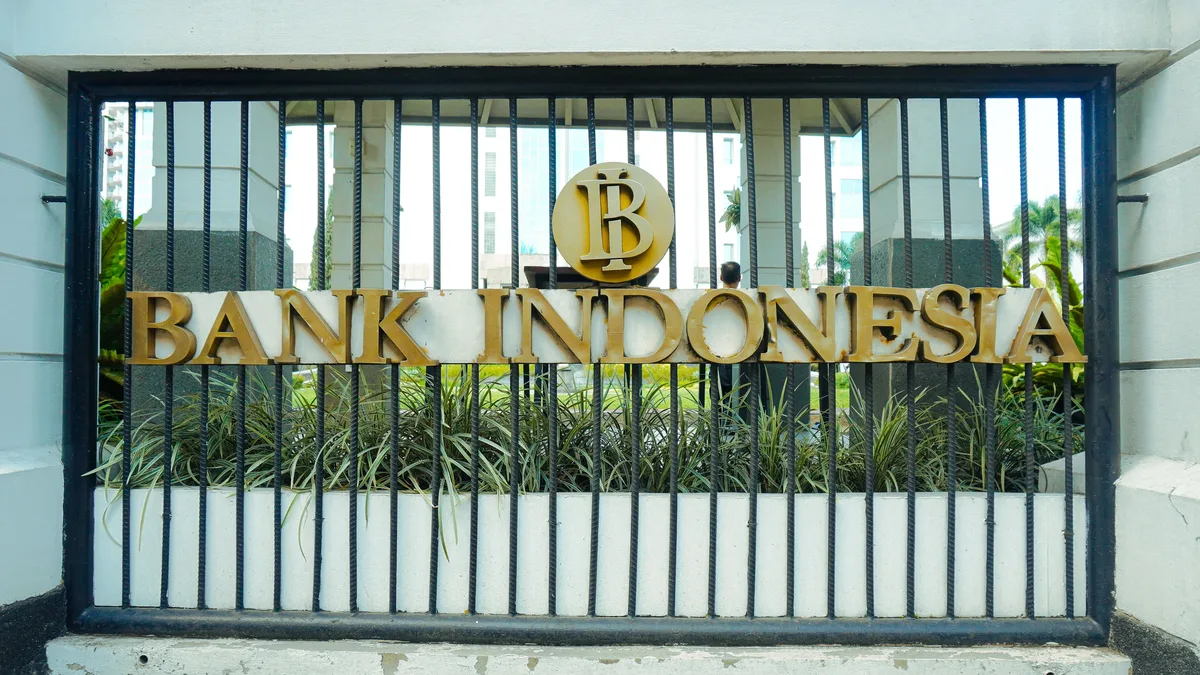
Bank Indonesia
| Official name | Bank Indonesia |
|---|---|
| Status | Central bank of the Republic of Indonesia |
| Primary function | Maintain rupiah stability |
| Headquarters | Jakarta |
| Founded | 1953 |
| Governing legislation | Act of the Republic of Indonesia No. 23 of 1999 |
| Key policy tools | Interest rates, open market operations, reserve requirements |
Overview
Bank Indonesia is the central bank of the Republic of Indonesia, functioning as the primary monetary authority for the nation. Its core mandates are to achieve and maintain the stability of the Rupiah's value, which encompasses both price stability and exchange rate stability. The institution executes monetary control through various instruments, including setting benchmark interest rates and regulating money supply. Beyond monetary policy, Bank Indonesia holds the exclusive right to issue Indonesian currency and manages the country's foreign exchange reserves. It also acts as a banker and fiscal agent for the government and plays a critical role in regulating and overseeing the national payment system. Furthermore, it contributes to financial system stability through macroprudential regulation and cooperation with other financial sector authorities.
History
Bank Indonesia's origins are directly tied to the nation's post-colonial history, emerging after Indonesia's proclamation of independence in the mid-20th century. It was formally established as the central bank in the 1950s, succeeding the earlier Dutch-era central bank, De Javasche Bank, whose assets and functions it took over. The legal foundation for its modern role was solidified with the enactment of a specific central bank act towards the end of the 20th century, which granted it formal independence. This legislative framework was further amended in the early 21st century to strengthen its autonomy and clarify its policy objectives, particularly in the wake of the Asian Financial Crisis. Throughout its history, the institution has navigated periods of hyperinflation, economic crises, and political change, evolving its policy tools and governance. Its development mirrors Indonesia's economic journey from a newly independent state to a major emerging market economy.
How it works today
Today, Bank Indonesia operates under a legal framework that grants it instrument independence to achieve its mandated goal of Rupiah stability. The primary tool for monetary control is the BI 7-Day Reverse Repo Rate (BI7DRR), which serves as the key benchmark interest rate for the economy. To manage liquidity and signal its policy stance, the central bank conducts regular open market operations using instruments like reverse repos, foreign exchange swaps, and term deposits. It actively intervenes in the foreign exchange market to mitigate excessive volatility in the Rupiah's exchange rate against other major currencies. The institution also oversees a modern and robust national payment system, which includes the real-time gross settlement system (BI-RTGS) and the national clearing system. Additionally, its Financial System Stability Committee coordinates with other agencies to monitor and address systemic risks within the broader financial sector.
Bank Indonesia yojana
The term "yojana" is not a standard or officially used term for Bank Indonesia's programs or schemes, as it is a word of Hindi and Sanskrit origin commonly associated with government plans in India. In the Indonesian context, the central bank's equivalent initiatives are typically referred to as policies, programs, or facilities. These include its monetary policy operations, macroprudential policy instruments, and various specific facilities for liquidity management within the banking sector. Bank Indonesia also runs programs aimed at financial inclusion and literacy, as well as initiatives to support the development of micro, small, and medium enterprises (MSMEs) through partnership patterns. Furthermore, it implements payment system modernization programs, such as the promotion of Quick Response Code Indonesian Standard (QRIS) for digital transactions. Any reference to a "Bank Indonesia yojana" likely stems from a linguistic misapplication and not from the institution's official nomenclature.
Bank Indonesia eligibility
Eligibility to directly engage with Bank Indonesia's core facilities is primarily restricted to licensed financial institutions operating within Indonesia. Commercial banks, rural banks, and certain non-bank financial institutions are the main entities eligible to participate in its monetary operations, such as repo facilities and standing facilities. For access to lender-of-last-resort liquidity support, stringent eligibility criteria apply, typically requiring proof of temporary liquidity shortages and the provision of high-quality collateral. The general public is not eligible for direct banking services or loans from the central bank, as it does not function as a commercial bank for individuals or corporations. However, eligibility for programs it supports, like certain MSME financing schemes, is determined by the partnering commercial banks according to their own risk assessments. Entities seeking to participate in the national payment system infrastructure must also meet specific operational and regulatory requirements set by the central bank.
Bank Indonesia apply online
There is no direct "application" process for individuals to Bank Indonesia for services like loans or accounts, as it is not a retail banking institution. For regulated financial institutions, processes for participation in monetary operations or payment systems are formal and conducted through designated electronic platforms, not a general public-facing online application portal. Commercial banks access the BI-RTGS system and other central bank facilities through secured, dedicated networks following a rigorous onboarding procedure. Information on policy announcements, regulations, and economic reports is published online through Bank Indonesia's official website for public access. For its financial literacy and inclusion initiatives, the public may access educational resources online, but these are informational, not application-based. Any online "application" related to Bank Indonesia-sponsored programs, such as MSME assistance, would be directed through the websites of partnering commercial banks, not the central bank itself.
Bank Indonesia status check
A "status check" in the context of Bank Indonesia typically refers to verifying the authenticity of Rupiah banknotes or checking the regulatory status of a financial institution. The public can check banknote authenticity using security features detailed on the central bank's website or through dedicated mobile applications provided by Bank Indonesia for this purpose. For regulated entities, the status of a bank's business license or its standing in relation to central bank regulations can be found in official publications or the Financial Services Authority's (OJK) registry, as supervisory roles are now shared. There is no public-facing online system to check the status of an individual's hypothetical transaction or application with Bank Indonesia, as it does not handle personal banking. The status of monetary policy, such as the current benchmark interest rate, is clearly published and updated on its official website following Board of Governors' meetings. Researchers often check the status of Indonesia's foreign exchange reserves and other macroeconomic indicators through the regular statistical reports released by the institution.
Bank Indonesia list
A relevant "list" pertaining to Bank Indonesia would be an enumeration of the financial institutions it directly regulates and interacts with. This includes the complete list of commercial banks operating in Indonesia, which are primary participants in its monetary operations and payment systems. The central bank also maintains a list of money changers and other foreign exchange actors that it licenses and supervises. Furthermore, there is a published list of securities eligible as collateral for banks seeking liquidity from Bank Indonesia's lending facilities. While not a "list" in a simple sense, its official regulations and circulars constitute a comprehensive directory of binding rules for the financial sector. The institution also periodically publishes lists of recalled or demonetized banknote series, which are important for the public and businesses to reference.
Why it matters
Bank Indonesia matters fundamentally because its effectiveness directly influences the purchasing power of the Indonesian Rupiah and the overall economic environment for millions of people. By maintaining price stability, it helps preserve savings, supports long-term business planning, and protects the vulnerable from the corrosive effects of high inflation. Its management of the exchange rate affects the cost of imports, the competitiveness of exports, and the stability of foreign investment flows into the country. As the lender of last resort and a key pillar of financial system stability, it provides a critical backstop that helps prevent banking crises and maintains public confidence in the financial system. Its role in developing efficient and inclusive payment systems, like QRIS, drives economic digitization and facilitates broader financial inclusion across the archipelago. Ultimately, the institution's credible and independent operation is a cornerstone for sustainable economic growth and resilience in Indonesia.
Common misconceptions
A common misconception is that Bank Indonesia functions as a commercial bank where individuals or companies can open savings accounts or apply for loans, which it does not. Another is that it is directly responsible for setting all interest rates on consumer loans and deposits, whereas it only sets the policy rate that influences market rates set by commercial banks. Some believe the central bank is fully owned and operationally controlled by the government, but it operates with a legally mandated degree of independence in formulating and implementing monetary policy. There is also a misunderstanding that its primary goal is to stimulate economic growth or create jobs; while its stability mandate supports growth, its primary legal objective is specifically Rupiah stability. People often conflate its role with that of the Financial Services Authority (OJK), not realizing that while BI focuses on monetary and macroprudential stability, the OJK handles microprudential supervision of individual financial institutions. Finally, the public may mistakenly think that printing more Rupiah is a simple solution to economic problems, not understanding that such action, if unanchored, can lead to destabilizing inflation.
Latest Bank Indonesia news
Latest reporting

Government keeps banks open Sunday ahead of nationwide
The Reserve Bank of India has approved Sunday operations for all banks to mitigate disruption from a three-day nationwide strike called by the United...

ADB Holds Pakistan's 2027 Growth Forecast at 3.7 Percent
The Asian Development Bank maintains its projection for Pakistan's economic growth at 3.7% for FY2027, below the government's target, while warning of

Indonesia Positions Itself as Russia’s Gateway to Southeast
President Prabowo Subianto promoted Indonesia as a natural entry point for Russian businesses into ASEAN during the Eastern Economic Forum in...

Indonesia's Natuna Sea Security Needs System
Despite new ships and partnerships, Indonesia's maritime security in the North Natuna Sea is hampered by slow reporting and coordination, allowing...

Indonesia closes parks due to fires
Indonesia has temporarily closed nine national parks and restricted access to four others as forest fires strain firefighting resources in six...
Indonesia's Digital Banking Race
Indonesia's digital banking sector, enabled by OJK regulations in 2018 and 2021, is consolidating around three leading players backed by major tech...