CJP Leaders Withdraw Petition After High Court Advice
CJP activists Saurav Das and Ashutosh Ranka withdrew their High Court petition challenging extended judicial custody after the court advised awaiting the outcome of proceedings before a Special Executive Magistrate.
CJP leaders Saurav Das and Ashutosh Ranka withdrew their petition before the Delhi High Court on October 21, 2026. Justice Subramonium Prasad permitted the withdrawal after repeatedly advising the petitioners to await the outcome of proceedings before the Special Executive Magistrate court, scheduled for later that day. The court declined to entertain the plea on the merits, clarifying it expressed no opinion on the challenge to the custody extension.
Justice Prasad urged counsel to withdraw the petition temporarily. He stated that relief might be obtained directly from the SEM, which would resolve the immediate dispute. The petition was withdrawn without any adjudication of the challenge to the SEM’s order. The High Court simply allowed the withdrawal after counsel informed the court of the decision.
Background of Custody Dispute
The petition stemmed from an SEM order extending the judicial custody of Saurav Das and Ashutosh Ranka. The two activists, aged 27 and 31 respectively, had been in custody since October 14. They were produced before the Special Executive Magistrate as their initial two-day judicial custody expired.
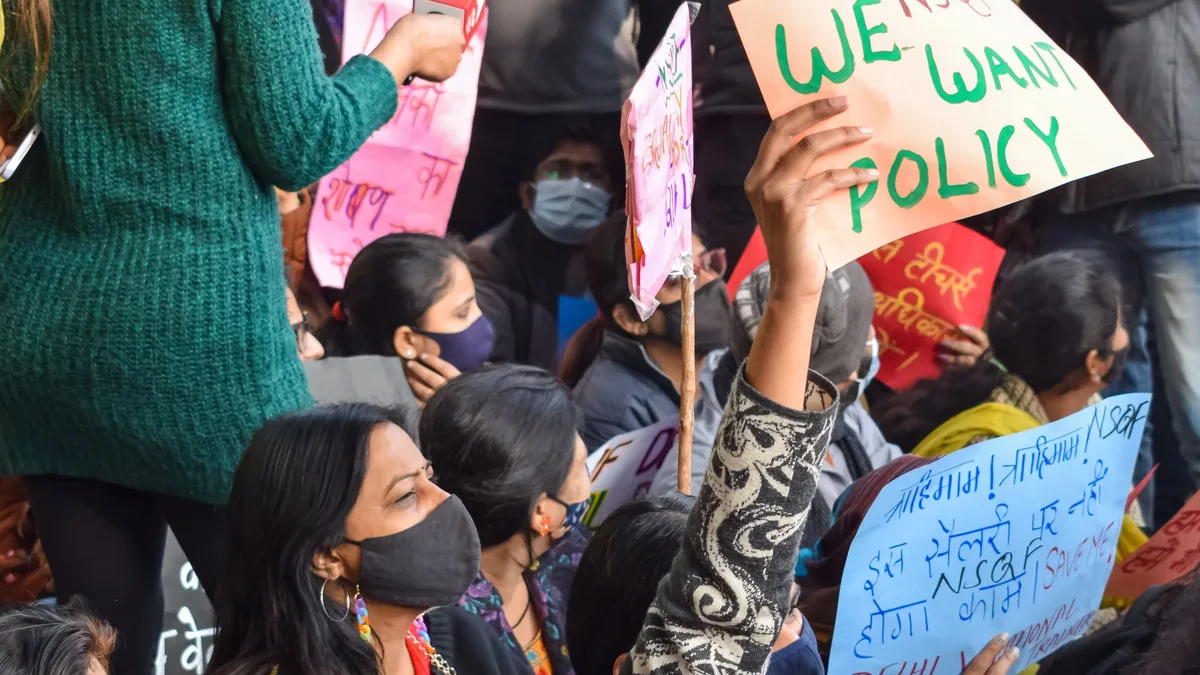
The SEM's October 19 order extended their custody until October 21. The petitioners challenged this, alleging the arbitrary rejection of sureties and unlawful continued detention. The case involves an alleged violation of peace bonds executed on October 11, 2026, related to an attempt to unfurl the national flag at Jantar Mantar.
The court noted the petitioners were at the forefront of a protest. They allegedly breached barricades at Jantar Mantar, a de-notified protest site, without permission after furnishing the peace bonds. The court emphasized they had breached a bond and that their remedy lay in revision proceedings.
Court's Legal Rationale
Justice Subramonium Prasad expressed disinclination to entertain the writ petition due to the availability of an alternative legal remedy. The court questioned why Article 226 jurisdiction was invoked when the SEM's order was revisable under Section 414 of the BNSS. It stated the question was not about the petition's maintainability but the appropriateness of High Court intervention at that stage.
The bench questioned how a previous Delhi High Court judgment cited by the petitioners applied. That case differed because it did not involve a breach of an earlier bond followed by a second preventive proceeding. Justice Prasad cautioned counsel against drawing the court into a wider debate that might prove counterproductive.
The court indicated the option of Section 414 BNSS would remain open after the SEM proceedings. It advised the petitioners to first pursue the remedy available before the revisional court. The court stated liberty is sacrosanct but noted the BNSS provides specific remedies for such cases.
Arguments and Considerations
Advocate Abhik Chimni appeared for the petitioners. He argued for setting aside the October 19 order, contending it was legally unsustainable and that the SEM lacked jurisdiction. Chimni argued the sureties were rejected arbitrarily and that preventive custody cannot be applied arbitrarily. He expressed apprehension that sureties could be rejected again, forcing a return to the High Court.
The court questioned whether insisting on sureties was illegal when petitioners were accused of breaching an earlier peace bond. It referenced discrepancies in photographs on bond documents and Aadhaar cards noted in the SEM's order. The bench also remarked that the petitioners' cause had changed over time, affecting the relevance of their immediate liberty claims.
The court expressed concern that protests could escalate beyond organizers' control. It cited risks of Section 163 BNSS violations when barricades are broken. The bench referenced incidents of arson in France and Albania as context for its remarks on protest escalation. Additional Solicitor General Chetan Sharma and counsel Ashish Dixit appeared for the authorities.
The petitioners were directed to pursue their remedy before the Special Executive Magistrate court scheduled for 2 pm Wednesday.