South Korea investigates North Korean landmine blast in DMZ
Three South Korean officers were injured by a landmine explosion inside the Demilitarised Zone on September 21.
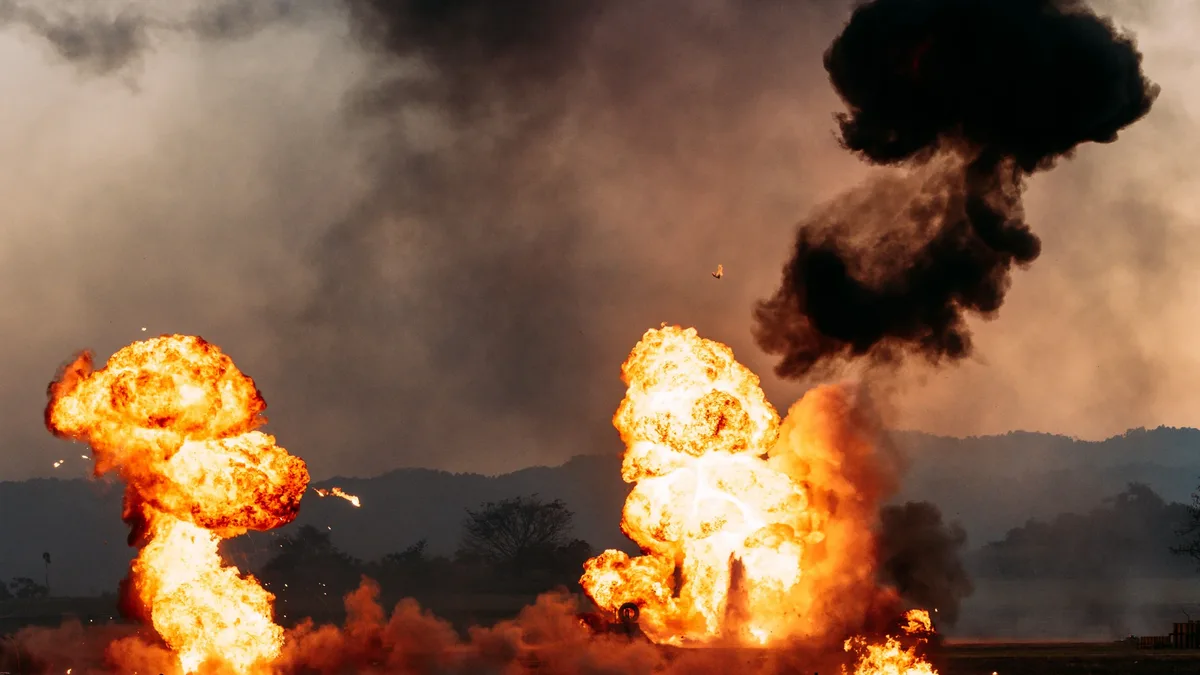
Three South Korean military officers were injured by a landmine explosion inside the Demilitarised Zone on September 21. The blast, which occurred about 10 metres south of the Military Demarcation Line, involved two exploding mines and a third, unexploded device found as soldiers withdrew. One officer lost his foot in the incident.
Seoul's military said the blast was likely caused by North Korean landmines. Preliminary findings from a joint probe with the United Nations Command suggest a very high likelihood that recently planted North Korean mines were responsible. The investigation is ongoing to determine whether the mines were deliberately planted or had drifted.
Investigation points to North Korean mines as likely cause
An interim investigation found a very high likelihood that North Korean mines caused the Sept. 21 explosions. The blast site was about 10 metres from an area where terrain changes were observed and where North Korean forces are believed to have recently planted mines. Since 2024, after North Korean leader Kim Jong Un designated South Korea as his country's 'principal enemy', Pyongyang's military has laid mines and built anti-tank barriers along the frontier.
Key differences were noted between the exploded devices and standard South Korean mines. The exploded landmines used TNT, a substance also used in South Korean mines, but they lacked metal fragments. South Korean landmines typically have a lethal radius of around 20 metres or more, while the blast radius of these mines was relatively small. A JCS official said that distinction made it difficult to conclude that South Korean soldiers had been deliberately targeted.
If the final probe concludes North Korea was responsible, officials said North Korea would bear full responsibility. Defense Minister Kang Shin-chul and the Joint Chiefs of Staff said they would take corresponding measures if the final investigation confirms North Korean mines caused the injuries. Yang Jin-hyeok, director of operations at the Joint Chiefs of Staff, said 'All necessary options are on the table' regarding measures after final results.
Military weighs proportional response under armistice rules
Officials emphasize any response must be proportionate and are reviewing options under the Korean War armistice mechanisms. One possible response is resuming loudspeaker broadcasts toward North Korea, a measure the Park Geun-hye administration used after a 2015 North Korean mine attack. Moon Seong-mook, director of the Unification Strategy Center at the Korea Research Institute for National Strategy, described the broadcasts as an effective means of pressuring Pyongyang. Moon Seong-mook said: "Loudspeaker broadcasts are a good option because they can be extremely painful for the North Korean regime."
Moon Seong-mook said North Korean authorities were particularly sensitive to outside information reaching their soldiers and residents. He cited the 2015 incident, when the broadcasts were followed by heightened military tensions and inter-Korean talks. However, he acknowledged that renewed broadcasts could heighten tensions and cause anxiety among residents near the border. He declined to speculate on whether the Lee administration would resume the broadcasts, which Seoul had halted as part of its efforts to ease tensions.
Military responses are fundamentally governed by the principle of proportionality. Moon Seong-mook said planting mines across the border or shelling North Korean positions would not be appropriate. The scope of any response will depend partly on whether investigators establish that North Korean troops deliberately targeted South Korean soldiers. Unlike the 2015 attack, which occurred along a regularly used military route, the latest explosions occurred in an area South Korean troops had for decades only rarely entered.
The military temporarily suspended the next phase of its route-clearing operations after the explosions, pending a safety review. A JCS official said military operations are fundamentally conducted offensively to secure operational initiative. The official said existing operations could be adjusted under military guidelines but stopped short of announcing additional operations. The military has previously responded to North Korean incursions across the Military Demarcation Line with warning shots and broadcasts, while expanding search routes and reinforcing protective equipment.
The DMZ is a 248-kilometre long and roughly four-kilometre wide buffer zone that has divided the Korean Peninsula since the 1953 armistice. No peace treaty has been signed between Seoul and Pyongyang, so they technically remain at war. The zone itself is officially demilitarised, but its northern and southern boundaries are among the world’s most heavily fortified frontiers and it remains littered with landmines. The Defense Ministry and Joint Chiefs of Staff will review available options once the final investigation concludes.