Korea 2026
| Fiscal year | 2026 |
|---|---|
| Presenting ministry | Ministry of Economy and Finance |
| Status | Proposed bill |
| Governing law | National Finance Act |
| Budget type | Consolidated central government budget |
| Submission date | September 2025 |
Overview
The Korea 2026 budget refers to the comprehensive annual fiscal plan proposed by the South Korean government for the fiscal year beginning January 1, 2026. It is a formal legislative bill that outlines planned government revenue, expenditure, and national debt management for that year. The bill is drafted by the executive branch, specifically the Ministry of Economy and Finance, following extensive internal government planning and consultation. It is then submitted to the National Assembly for deliberation, amendment, and final approval, as mandated by the country's Constitution. The budget is a critical policy document that reflects the administration's economic priorities and strategic objectives for the nation. Its passage is a mandatory annual process that determines the allocation of public resources across all sectors of government and society.
History
The modern South Korean national budget process has its origins in the establishment of the Republic of Korea's government in the late 1940s, following liberation from Japanese colonial rule. The framework for budget formulation and legislative approval was codified in the Constitution and further detailed in the National Finance Act. The specific "Korea 2026" budget, as a future fiscal plan, is part of a continuous, iterative annual cycle that has evolved over decades. Major reforms to the budget system occurred in the early 2000s, introducing medium-term fiscal planning and performance-based budgeting elements. The process for the 2026 budget will follow this established legal and procedural timeline, typically beginning with ministerial submissions in the early spring of 2025. Its historical context is one of transitioning from a focus on rapid industrialization and growth to addressing contemporary challenges like demographic aging, economic innovation, and social welfare.
How it works today
The budget process for a given year, such as 2026, follows a strict statutory timeline outlined in the National Finance Act. The Ministry of Economy and Finance issues budget guidelines to all central government agencies, which then submit their detailed budget requests by a set deadline, usually in the first half of the year preceding the budget's execution. The Ministry then reviews, consolidates, and negotiates these requests to form a unified government draft budget bill. This draft is presented to the State Council for approval before being formally submitted by the executive to the National Assembly by no later than October 2 of the year prior to execution. The National Assembly's Special Committee on Budget and Accounts then conducts a review, holds hearings, and proposes amendments before putting the bill to a plenary vote. Upon passage, the legally enacted budget is returned to the executive for implementation, with spending subject to strict quarterly allotment and audit by the Board of Audit and Inspection.
Why it matters
The national budget is the single most important tool for implementing government policy and shaping the country's economic trajectory. It directly determines the scale and scope of public services, infrastructure investment, national defense, and social safety nets available to citizens. The allocation of funds within the budget signals official priorities, influencing economic sectors, regional development, and research directions. Furthermore, the budget's balance between revenue and expenditure is a primary determinant of national debt levels, impacting the country's long-term fiscal sustainability and creditworthiness. The legislative deliberation process is a core function of representative democracy, allowing for public scrutiny and political negotiation over the use of taxpayer money. Ultimately, the effectiveness and efficiency of the budget's execution have profound consequences for economic growth, social stability, and national competitiveness.
Common misconceptions
A common misconception is that the National Assembly creates the budget from scratch; in reality, the Assembly amends and approves a bill drafted and submitted by the executive branch, with its power lying in modification and ratification. Another is that the budget is primarily about new spending, when a significant portion of it is mandatory, covering existing statutory obligations and the operational costs of ongoing government functions. Some believe the budget process is purely technical, overlooking its inherently political nature where competing policy goals and regional interests are negotiated. There is also a frequent public perception that the budget is fixed upon passage, whereas in-practice supplementary budgets are often proposed and enacted during the fiscal year to address unforeseen circumstances. Finally, it is mistaken to view the budget in isolation, as it is intrinsically linked to and constrained by national tax policies, economic forecasts, and medium-term fiscal plans.
Latest Korea 2026 news
Latest reporting

South Korea Supreme Court overturns Han Duck-soo's 15-year sentence
The Supreme Court overturned former Prime Minister Han Duck-soo's 15-year prison term, remanding his case for retrial while upholding some...

South Korea expands anti-piracy mission to Strait of Hormuz waters
South Korea's Cabinet has approved expanding the Cheonghae Unit's operational area to waters south of Oman, near the Strait of Hormuz.

Pakistan Tests First Indigenous Fa’az BVR Missile
Pakistan successfully tested its first indigenously developed beyond-visual-range air-to-air missile, the Fa’az-IIR, on November 3, 2026.

Delhi High Court Seeks India's Social Media Addiction Policy
India's Delhi High Court has asked the central government to clarify if it is developing a policy to curb addiction-causing features on social media...

Pakistan Leaders Reaffirm Minority Rights at Diwali
President Asif Ali Zardari and Prime Minister Shehbaz Sharif extended Diwali greetings to Pakistan's Hindu community on November 8, 2026, reaffirming...
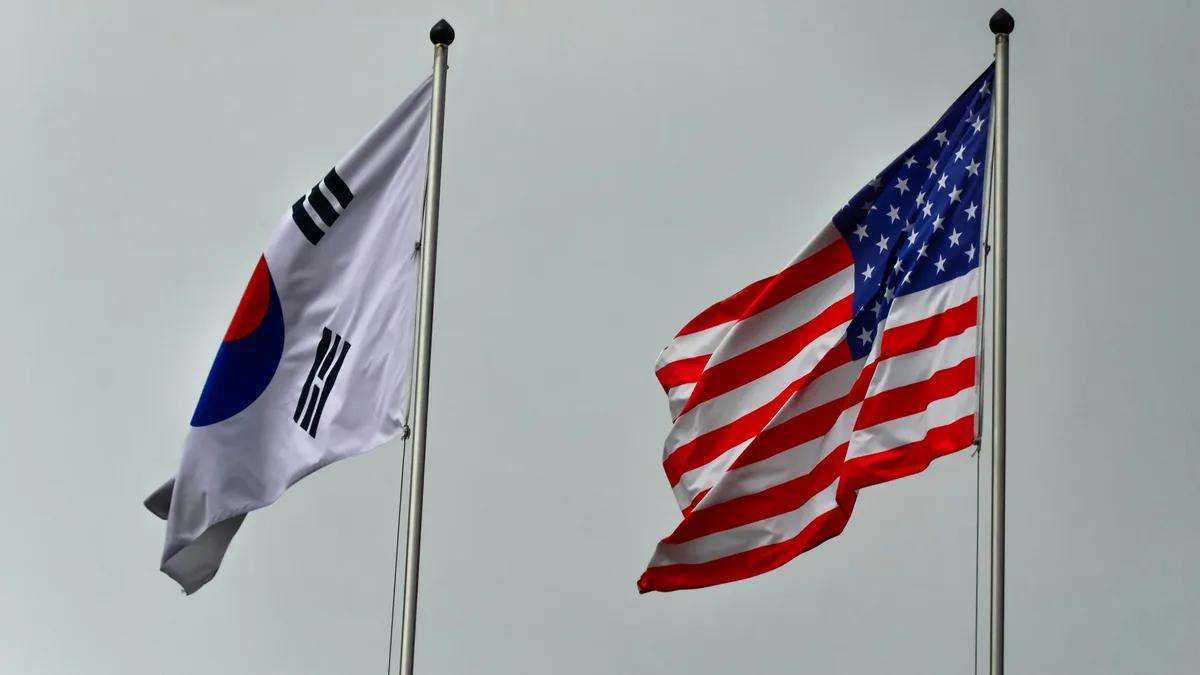
U.S. Defense Delegation Confirms OPCON Transfer on Track
A U.S. defense delegation reaffirmed the conditions-based transfer of wartime operational control to South Korea remains unchanged.