India Bjp
| Founded | 1980 |
|---|---|
| Headquarters | New Delhi, India |
| Governing body | Bharatiya Janata Party National Executive |
| Ideology | Integral humanism, Hindutva |
| Political position | Right-wing |
Overview
The Bharatiya Janata Party (BJP) is a major political party in India, considered one of the country's two dominant national parties alongside the Indian National Congress. It is classified as a right-wing party within the Indian political spectrum, with a ideological foundation in Hindutva, or Hindu nationalism. The party advocates for a broadly defined cultural nationalism that seeks to align Indian national identity with its Hindu civilizational heritage. Its policy platform has historically emphasized social conservatism, a strong national defense, and economic development with a focus on self-reliance. The BJP has formed the central government in India multiple times since the late 1990s, most recently achieving consecutive single-party parliamentary majorities in the 2014 and 2019 general elections. The party's organizational structure is extensive, with a significant presence across most Indian states and union territories.
History
The BJP was formally launched as a distinct political party in the early 1980s, emerging from the broader Hindu nationalist social movement represented by the Rashtriya Swayamsevak Sangh (RSS) and its earlier political incarnations. Its direct predecessor was the Bharatiya Jana Sangh, a party founded in the 1950s that dissolved into the Janata Party coalition in the 1970s. The modern BJP initially struggled to gain electoral traction, winning only two parliamentary seats in its first national election in 1984. Its political fortunes shifted significantly in the late 1980s and early 1990s following its campaign centered on the construction of a temple at a disputed religious site in Ayodhya, which galvanized a section of the Hindu electorate. This period marked its transition from a marginal player to a principal opposition party. The BJP first led a national coalition government for a short period in the late 1990s before securing a full term from 1998 to 2004 under Prime Minister Atal Bihari Vajpayee. The party's historical narrative consistently emphasizes a critique of the Congress party's governance and a commitment to reasserting what it terms India's indigenous cultural values.
How it works today
The BJP operates under a hierarchical organizational structure with a strong central leadership, typically embodied by its national president and the parliamentary party leader, who is the Prime Minister when the party holds a national majority. Decision-making authority is concentrated in the national executive and the parliamentary board, though it maintains state units that contest local elections. The party maintains a deep and formalized organizational connection with the Rashtriya Swayamsevak Sangh (RSS), whose volunteers and ideological framework provide grassroots mobilization and cadre. Its electoral strategy combines a core ideological appeal to Hindu nationalism with a broader development-oriented governance narrative, often leveraging the personal popularity of its senior leaders. The BJP utilizes a sophisticated digital and media outreach apparatus to communicate its message and manage its public image, which has become a hallmark of its contemporary political operations. In parliament, the party exercises tight discipline, with its legislative agenda focusing on economic reforms, national security policies, and initiatives aligned with its socio-cultural vision.
Why it matters
The BJP's dominance in Indian politics since 2014 represents a significant ideological shift in the country's governance, moving the center of political discourse toward a more explicitly Hindu nationalist orientation. Its policies and legislative actions have profound implications for India's secular constitutional framework, inter-community relations, and the interpretation of national history and identity. The party's economic policies, which combine welfare schemes with pushes for privatization and infrastructure development, directly impact the trajectory of the world's largest democracy and a major economy. Its foreign policy stance, emphasizing strategic autonomy and national strength, shapes India's role in global geopolitics. The BJP's electoral success has fundamentally altered the structure of political competition in India, relegating historically powerful regional and national parties to diminished roles. Furthermore, the party's model of integrating ideological movement politics with electoral machinery is studied as a potent template for political organization elsewhere.
Common misconceptions
A common misconception is that the BJP is a monolithically homogeneous organization; in reality, it contains significant internal factions and ideological debates, particularly between its more strident Hindu nationalist wing and its pragmatic governance-focused leaders. Another misconception is that the party's electoral support comes exclusively from religious mobilization; while this is a key component, its victories also rely on a broad coalition including aspirational middle-class voters, segments of the rural poor attracted by welfare schemes, and regional allies. It is also inaccurate to view the BJP's relationship with the RSS as one of simple subordination; the dynamic is symbiotic yet often involves negotiation and tension over political strategy versus ideological purity. Some observers mistakenly equate the party's Hindutva ideology with the theological practices of Hinduism itself, whereas the ideology is a political and cultural nationalist construct that selectively uses religious symbolism. Finally, while the party is often described as uniformly pursuing neoliberal economic policies, its actual governance has seen a significant expansion of state-led welfare programs and protectionist measures in certain sectors.
Latest India Bjp news
Latest reporting
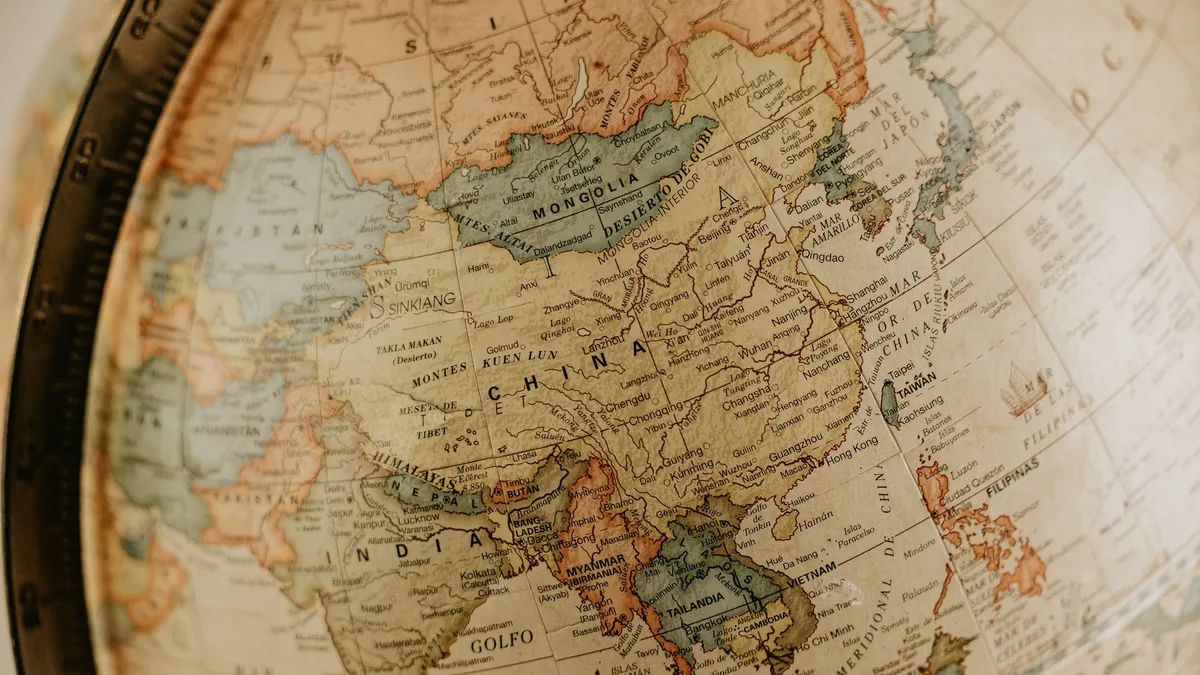
India and ASEAN Deepen Cooperation on Disaster Warning and Maritime Security
India and ASEAN have agreed to enhance early warning systems for disasters and boost maritime security cooperation.

Rahul Gandhi warns of economic disaster in India
Opposition leader Rahul Gandhi told a US audience that India faces an economic disaster due to massive unemployment and a broken manufacturing base...
Modi Heads to Manila for ASEAN-India Summit
Prime Minister Narendra Modi will attend the ASEAN-India and East Asia Summits in Manila from November 16, focusing on trade deficits and maritime...
Supreme Court Mandates Bank Liability for Digital Arrest Scams
India's Supreme Court has ordered banks to fully compensate victims of digital arrest scams where institutional failure is proven.

Delhi High Court Seeks India's Social Media Addiction Policy
India's Delhi High Court has asked the central government to clarify if it is developing a policy to curb addiction-causing features on social media...
India probes Chinese, Malaysian, Vietnamese and Thai aluminium dumping
India's trade watchdog has launched an anti-dumping investigation into aluminium extrusion imports from China, Malaysia, Vietnam and Thailand...