Pakistan advances US-Iran mediation at ECO summit
Pakistan's top military and foreign officials met with Iran's foreign minister during an ECO summit, discussing regional security and ongoing efforts to mediate between the United States and Iran.
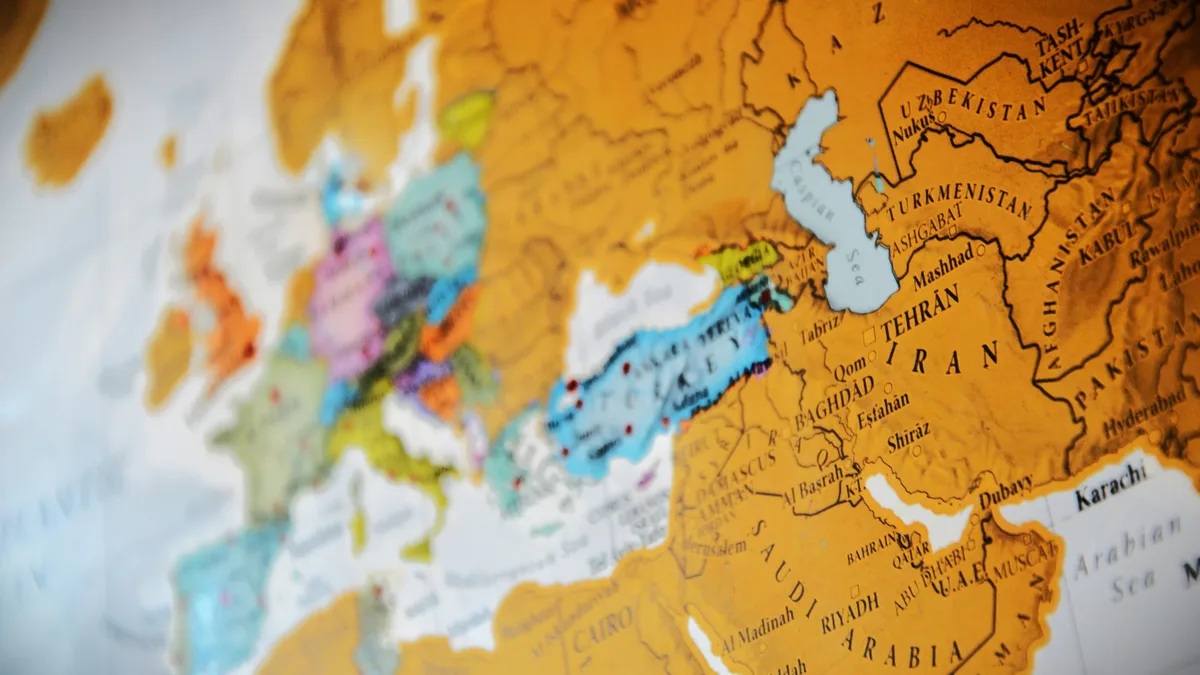
Pakistan's Chief of Army Staff and Chief of Defence Forces, Field Marshal Syed Asim Munir, met with Iranian Foreign Minister Abbas Araghchi on Monday, November 17, 2026. The meeting in Rawalpindi focused on regional security and Pakistan's mediation between the United States and Iran. It took place during Araghchi's visit for the 30th Economic Cooperation Organisation (ECO) Council of Ministers meeting in Islamabad.
Araghchi led a high-level delegation to meet Munir at GHQ. The discussions covered mutual interests and evolving geopolitical developments. The Iranian foreign minister appreciated Pakistan’s constructive role in promoting regional peace and stability. He expressed his country’s desire to further strengthen bilateral relations. Araghchi said Tehran trusted Islamabad as a "good friend". Both sides exchanged views on addressing common security challenges.
ECO summit highlights regional connectivity and economic integration
Pakistan hosted the two-day ECO ministerial meeting on November 15 and 16 under the theme 'Reviving Regionalism for a Resilient ECO'. The gathering prepared member states for the 18th ECO leaders’ summit scheduled in Tehran on December 4. Araghchi addressed the council, highlighting the importance of strengthening regional connectivity, facilitating trade, and expanding cooperation in the energy sector.
He called for a reliable and sustainable regional energy mechanism. Araghchi stated that greater regional cooperation would contribute to collective stability while reducing external threats. He advocated for a modern, comprehensive regional trade agreement to expand commerce and generate benefits across the region. Iranian Foreign Minister Abbas Araghchi stated that member states of the ECO supported Tehran’s proposal to reopen the Strait of Hormuz.
Pakistan maintains diplomatic channel between US and Iran
Pakistan has been mediating between Washington and Tehran since less than two months after the war began. The conflict started following US and Israeli strikes on Iranian territory in February. Pakistan brokered a ceasefire between the United States and Iran on April 8. It then hosted direct negotiations on April 11 and 12. The Islamabad Memorandum of Understanding was signed between the US and Iran in Geneva on June 17. The MoU set a framework to move towards a permanent end to the war.
Deputy Prime Minister and Foreign Minister Ishaq Dar stated on Monday that Islamabad had not given up on its diplomatic efforts. Dar said Iran had 'fast-tracked' its seven-day proposal to reopen the Strait of Hormuz to a two-day plan. Iran was prepared to reopen the strait within two days if the United States accepted Tehran’s conditions. The response from the United States is pending. Dar expressed hope that the United States would respond to the proposal 'very soon' now that it was no longer busy with its midterm elections. Araghchi said Iran's seven-point proposal could provide a basis for renewed negotiations.
Munir's diplomatic shuttles underpin mediation efforts
Field Marshal Munir has made multiple visits to Tehran to sustain dialogue. He travelled to Iran on August 24 and met Iranian President Masoud Pezeshkian, Parliament Speaker Mohammad Bagher Ghalibaf, and Araghchi. Those discussions occurred amid heightened concern over the escalating conflict between Yemen's Ansar Allah rebels and Saudi Arabia, and the security of the Strait of Hormuz.
Munir visited Tehran again on October 21 under the Makkah Defence Pact. Representatives from Pakistan, Saudi Arabia and Turkiye held discussions with Iranian leaders on regional security during that visit. Iranian leaders conveyed that the US must take the first steps to rebuild trust. They stated that Washington's acceptance of Tehran's seven-point proposal could provide a starting point for renewed negotiations. President Pezeshkian called for greater regional unity and urged Muslim countries to develop a coordinated response to threats.
Araghchi accused Washington of pursuing policies based on aggression, threats and economic pressure. He stated Tehran has no inherent dispute with other countries in the region. The Islamabad Memorandum subsequently faltered amid renewed hostilities, leaving efforts to secure a lasting settlement unresolved. Pakistan's diplomatic efforts are expected to continue shaping regional security dynamics ahead of the December 4 ECO leaders' summit in Tehran.