Ministry Of Home Affairs
| Ministry | Ministry of Home Affairs |
|---|---|
| Governing body | Government of India |
| Headquarters | North Block, New Delhi |
| Primary responsibility | Internal security and domestic policy |
| Key functions | Maintenance of internal security, border management, centre-state relations, disaster management |
| Jurisdiction | Nationwide |
| Subordinate organizations | Includes Central Armed Police Forces, Intelligence Bureau, Central Police Organizations |
Overview
The Ministry of Home Affairs (MHA) is the primary government ministry responsible for the maintenance of internal security and domestic policy in India. It oversees a vast portfolio that includes law and order, border management, center-state relations, and disaster management. The Ministry's functions are critical for national integrity, encompassing the administration of the Indian Police Service (IPS) and central armed police forces. It also handles the granting of citizenship and passports, along with the management of union territories. The MHA is the nodal ministry for implementing numerous government schemes, often referred to as 'yojanas', aimed at internal security, welfare of police personnel, and rehabilitation. Its work is governed by various parliamentary acts and it operates through several attached and subordinate offices.
History
The Ministry of Home Affairs traces its origins to the British colonial administration in India during the 18th century. Its precursor was the Home Department established under the Government of India Act 1858, following the transfer of control from the East India Company to the British Crown. This department was tasked with maintaining internal order, managing the civil services, and overseeing the princely states. After India gained independence in 1947, the ministry was reconstituted as the Ministry of Home Affairs under the leadership of Sardar Vallabhbhai Patel, who is credited with integrating the princely states. Throughout the latter half of the 20th century, its role expanded to address new internal security challenges, including terrorism and insurgency. The ministry's structure and responsibilities have been subsequently defined and refined by various official resolutions and acts of Parliament.
How it works today
Today, the Ministry of Home Affairs functions as a complex bureaucracy headed by a Cabinet Minister, supported by Ministers of State and a senior civil servant serving as the Home Secretary. It operates through several key departments, including the Department of Internal Security, the Department of States, and the Department of Border Management. The ministry formulates policies and provides directives to state governments on law and order matters, while also directly controlling central police organizations like the Central Reserve Police Force (CRPF) and the Intelligence Bureau (IB). It processes security clearances, manages the legislative framework for internal security, and coordinates national responses to major disasters through the National Disaster Management Authority (NDMA). Furthermore, the MHA releases guidelines and funds for various beneficiary-oriented schemes, which are often implemented in collaboration with state governments.
Ministry Of Home Affairs yojana
The term "Ministry Of Home Affairs yojana" refers to any scheme or program administered by the ministry, though it is not a singular scheme name. These yojanas typically focus on internal security, police modernization, and welfare measures for personnel in the security forces. Examples include the Modernization of Police Forces (MPF) Scheme, which aims to strengthen the infrastructure and weaponry of state police forces. Another is the National Relief Fund for families of central armed police force personnel killed in action. The ministry also runs rehabilitation schemes for surrendered militants in certain regions and schemes for the protection of civil rights. Each specific yojana has its own set of objectives, funding patterns, and implementation mechanisms detailed in official government documents and notifications.
Ministry Of Home Affairs eligibility
Eligibility for benefits under an MHA yojana is strictly defined by the specific guidelines of each scheme and is never universal. For welfare schemes, eligibility is typically restricted to serving or retired personnel of the central armed police forces and their families, often based on criteria like years of service or nature of death or disability. Schemes related to police modernization have eligibility criteria for state governments and union territory administrations to receive central assistance. Rehabilitation schemes may have eligibility based on geographic region and demonstrable surrender from prescribed militant groups. Schemes for victims may require official certification from law enforcement agencies. It is essential for potential beneficiaries to consult the official notification of the particular yojana, as eligibility can be highly specific and documentation-heavy.
Ministry Of Home Affairs apply online
Application processes for MHA yojanas are increasingly moving towards online portals to improve accessibility and transparency. The exact procedure is scheme-dependent, but generally involves visiting the dedicated website for the particular yojana or the MHA's main website. Applicants, often through their respective force headquarters or state government nodal officers, must register and fill out detailed digital application forms. These forms require uploading scanned copies of necessary documents, such as service certificates, identity proof, and bank details. Some portals may generate a unique application reference number for tracking. It is crucial to note that for many schemes targeting personnel, the application is routed through the applicant's department or unit for verification before final submission to the MHA.
Ministry Of Home Affairs status check
Checking the status of an application for an MHA yojana is typically done through the same online portal used for submission. After logging into the portal with their credentials, applicants can access a 'Track Application' or 'Status Check' section. This requires entering the unique application reference number provided during submission. The portal will then display the current stage of processing, such as 'Under Verification at Unit Level', 'Forwarded to MHA', 'Approved', or 'Rejected'. Some portals may also provide reasons for rejection or request further information. For schemes not fully digitized, status inquiries may require direct communication with the designated nodal officer in the applicant's force or state department, who liaises with the MHA.
Ministry Of Home Affairs list
A comprehensive list of all schemes under the Ministry of Home Affairs is maintained and published on its official website. This list is organized categorically, often under headings like 'Schemes for Police Modernization', 'Welfare Schemes', and 'Rehabilitation Schemes'. Each listed scheme is usually accompanied by a brief description and a link to its detailed guidelines, application forms, and contact information. Notable schemes frequently listed include the Modernization of Police Forces (MPF) Scheme, the Central Scheme for Assistance to Civilian Victims of Terrorist/Communal/Naxal Violence, and various scholarship schemes for wards of security personnel. The list is dynamic and is updated as new schemes are launched or existing ones are modified or discontinued.
Pros and cons
A significant advantage of MHA yojanas is their targeted approach, providing crucial financial aid, welfare, and infrastructure support specifically to the internal security apparatus and affected individuals. They bring national standardization and funding to areas like police equipment and victim compensation that might otherwise suffer from regional disparities. However, a common drawback is the complex and multi-layered bureaucratic process, which can lead to delays in the disbursement of funds or benefits. Applicants often regret not meticulously following documentation requirements, leading to rejection. Another criticism is that some modernization schemes can be heavily focused on hardware procurement without commensurate investment in human resource training or systemic reform. The eligibility criteria are also often so narrow that genuinely needy cases falling outside strict parameters receive no support.
Who it suits
MHA yojanas are specifically suited for their defined beneficiary groups and are not general public programs. They are designed for serving and retired personnel of the central armed police forces and state police seeking welfare benefits or their families in case of tragedy. State police departments and union territory administrations looking to upgrade their infrastructure and capabilities through central government grants are the target for modernization schemes. These programs also suit individuals and communities in specific conflict-affected regions who are eligible under precise rehabilitation or victim assistance schemes. Ultimately, these yojanas suit those who can navigate or have institutional support to navigate the formal government application process and who fit the exact, often rigid, eligibility boxes set by the ministry.
Latest Ministry Of Home Affairs news
Latest reporting

India to release AI regulation consultation paper within a month
The Ministry of Electronics and IT will publish a consultation paper on AI governance within a month, focusing on safety and deepfakes while relying...
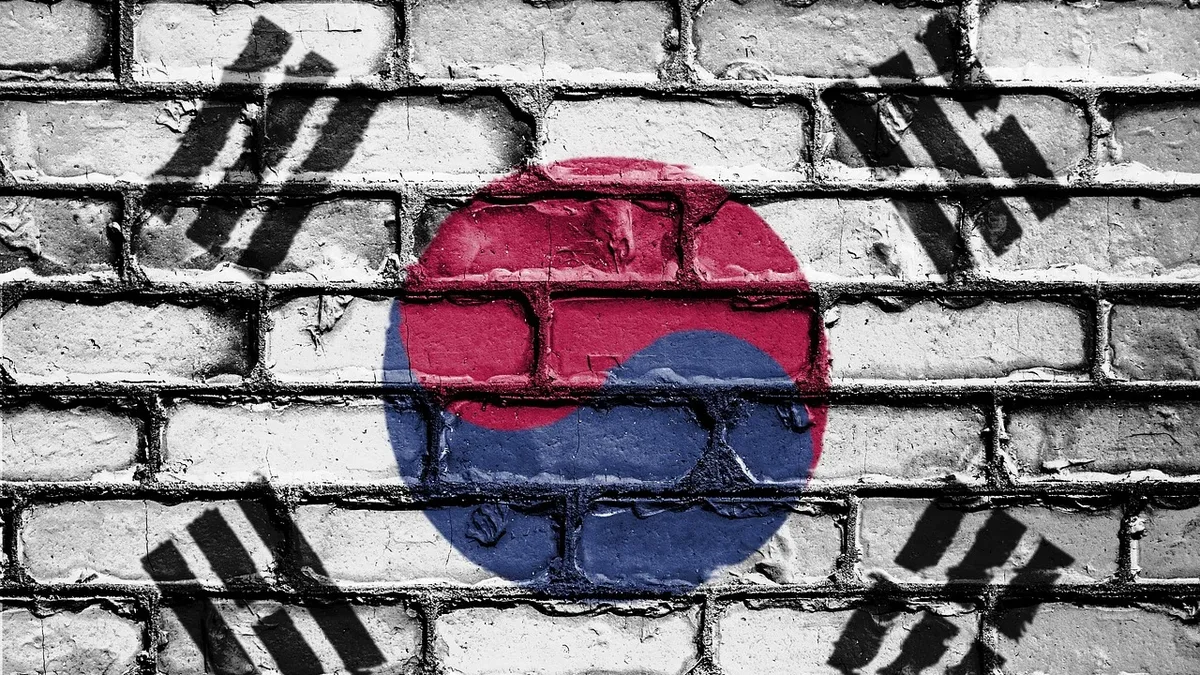
South Korea probes 840 foreign real estate transactions
South Korea's land ministry is investigating 840 property transactions by foreign nationals from June 2025 to July 2026.

India sets five-year passport validity for children under 15
The Ministry of External Affairs has amended passport rules, setting a five-year validity for ordinary passports issued to children below 15.

CCEA Approves ₹20,804 Crore Rail Network Expansion
The Cabinet Committee on Economic Affairs has approved eight railway multi-tracking projects worth ₹20,804 crore across nine states.
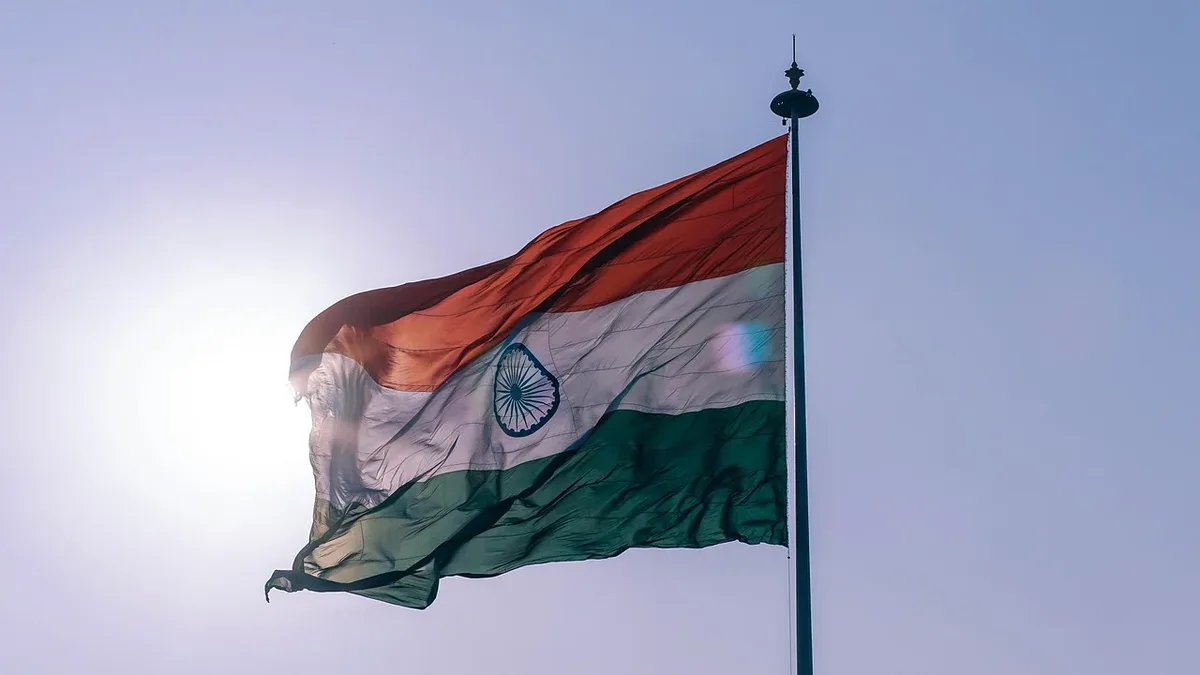
Pakistan rejects India's Kashmir map remarks after UN vote
Pakistan's foreign ministry has rejected India's recent statements on Jammu and Kashmir.

Tribal Affairs Ministry says Forest Rights Act lacks gram sabha consent provision
The Union Ministry of Tribal Affairs has told the Power Ministry that the 2006 Forest Rights Act contains no provision requiring gram sabha consent.