Ministry Of Economy And Finance
| Official name | Ministry of Economy and Finance |
|---|---|
| Type of entity | Government ministry |
| Primary responsibility | Economic policy and public finance |
| Governing body | The national government |
| Headquarters location | The national capital |
| Subordinate agencies | National tax service, Public procurement service, Treasury bureau |
Overview
The Ministry of Economy and Finance (MEF) is a central government institution responsible for formulating and managing the fiscal and economic policy of a nation. Its core functions typically encompass budget preparation, revenue collection through taxation and customs, public expenditure management, and national debt oversight. The ministry plays a pivotal role in macroeconomic stabilization, aiming to foster sustainable economic growth and maintain financial stability. It is the primary authority for drafting the annual national budget and presenting it to the legislature for approval. Furthermore, the ministry often oversees critical subordinate departments such as the treasury, internal revenue, and customs agencies. Its policies directly influence taxation levels, public investment, and the overall economic direction of the country.
History
The modern concept of a unified ministry overseeing both economy and finance has its origins in the administrative reforms of European states during the 19th and early 20th centuries. Prior to this, functions related to treasury, taxation, and economic planning were often dispersed among various officials or departments. The integration of economic planning with fiscal management became a standard model for national governments following the Second World War, as states took a more active role in directing economic development. The specific title "Ministry of Economy and Finance" became widely adopted in the latter half of the 20th century, reflecting a holistic approach to macroeconomic governance. This institutional structure has been replicated and adapted by numerous countries across different continents as part of standard government organization. The historical evolution of such ministries is closely tied to the development of modern macroeconomic theory and the expanding role of the state in economic affairs.
How it works today
Today, the Ministry of Economy and Finance operates through a structured bureaucracy of directorates-general, departments, and specialized agencies. Its work is cyclical, centered on the fiscal year, beginning with the formulation of the budget based on revenue forecasts and government policy priorities. The ministry collects economic data, conducts analyses, and produces reports that inform cabinet-level decision-making on issues like tax reform, subsidy allocation, and public borrowing. It manages the government's bank accounts, processes payments for public sector wages and contracts, and ensures the accounting of all public funds. Internationally, the ministry often represents the country in financial institutions such as the International Monetary Fund and the World Bank. Continuous functions include monitoring economic indicators, enforcing tax laws, and developing long-term economic strategies to address challenges like inflation, unemployment, and trade deficits.
Ministry Of Economy And Finance yojana
Note: "Yojana" is a Hindi term for scheme or plan. In the context of a Ministry of Economy and Finance, this refers to the specific fiscal schemes, programs, or initiatives it administers. These are not singular but encompass a wide portfolio of government interventions funded through the budget. Examples include infrastructure development funds, social security programs, industrial promotion schemes, and agricultural support packages. Each yojana has defined objectives, budgetary allocations, implementation guidelines, and target beneficiaries. The ministry's role is to design these schemes in alignment with broader economic goals, ensure their budgetary feasibility, and monitor their financial execution. The specific list of active yojana is dynamic, changing with each annual budget and political administration, and is detailed in official budget documents and on the ministry's website.
Ministry Of Economy And Finance eligibility
Eligibility for programs under the Ministry of Economy and Finance is not universal but is defined on a per-scheme basis. For direct beneficiary schemes, eligibility criteria can include factors such as income level, age, occupational category, geographical location, or specific economic status. For instance, a tax rebate scheme may have eligibility based on income brackets and types of investment, while a business subsidy may target specific industries or small and medium-sized enterprises. Application processes typically require submission of documented proof meeting these criteria, such as income certificates, business registration documents, or identity proofs. It is crucial for potential applicants to consult the specific guidelines of the individual yojana, as criteria and required documentation vary extensively. There is no single "eligibility" for the ministry itself, only for the discrete financial programs it administers.
Ministry Of Economy And Finance apply online
Application processes for ministry schemes are increasingly facilitated through centralized digital government portals or dedicated scheme websites. The exact online procedure is unique to each specific yojana, but generally follows a common pattern. Applicants must first register on the relevant portal using personal identification details, often linked to a national ID system. They then select the specific scheme and fill out the required application form, uploading scanned copies of necessary eligibility documents. The platform typically provides an application reference number and allows users to track the submission status. Some portals may integrate with banking systems for direct benefit transfer upon approval.
Ministry Of Economy And Finance status check
Checking the status of an application or transaction with the ministry is conducted through the same digital platforms used for application. Applicants must log into their account on the relevant government portal using their credentials. Within the user dashboard, there is usually a section to view submitted applications, each identifiable by its unique reference number. The status may show stages such as "Received," "Under Verification," "Approved," "Rejected," or "Payment Processed." For tax-related matters, separate online portals for the revenue department allow taxpayers to check the status of returns, refunds, or any pending assessments. Status checks for broader policy initiatives or budget bills are a matter of public legislative record, tracked through parliamentary or congressional websites, not a personal application status.
Ministry Of Economy And Finance list
A comprehensive list pertaining to the Ministry of Economy and Finance encompasses several distinct categories. First is the list of all currently active government schemes (yojana) under its purview, with their budgetary allocations. Second is the list of its internal organizational structure, including all secretariats, departments, and subordinate offices. Third is the list of key public financial documents it produces, such as the annual budget, economic survey, and fiscal policy statements. Fourth, for transparency, many ministries publish lists of authorized signatories, tender notices, and contract awards. Fifth, there may be regulatory lists, such as licensed financial institutions or approved foreign investment projects. These lists are maintained as official records and are published on the national government's websites or the ministry's own digital portal for public access.
Why it matters
The Ministry of Economy and Finance matters because it is the primary architect of a nation's fiscal health and economic trajectory. Its decisions on taxation and spending directly redistribute resources within society, affecting everything from public service quality to income inequality. Effective management by the ministry is crucial for maintaining investor confidence, which influences currency stability and the cost of government borrowing. The ministry's capacity to forecast economic trends and respond with appropriate policy is a key determinant in navigating recessions, controlling inflation, and stimulating job creation. Its role in ensuring transparent and accountable use of public funds is fundamental to good governance and public trust. Ultimately, the performance of this ministry has a profound and daily impact on the economic well-being of both citizens and businesses.
Common misconceptions
A common misconception is that the Ministry of Economy and Finance directly creates jobs or runs businesses; its role is primarily regulatory and facilitative through policy, not operational. Another is that the ministry has an unlimited pool of money, ignoring the constraints of revenue collection, debt sustainability, and legislative appropriation. People often conflate the ministry with the central bank, not realizing that monetary policy (interest rates, money supply) is typically set by an independent institution, while the ministry handles fiscal policy (taxation, spending). There is also a belief that all economic problems can be solved by the ministry simply increasing spending, without regard for inflationary pressures or long-term debt burdens. Finally, many assume the ministry's work is purely technical and apolitical, when in reality its budget and tax proposals are deeply political documents that reflect the governing party's priorities and compromises.
Latest Ministry Of Economy And Finance news
Latest reporting
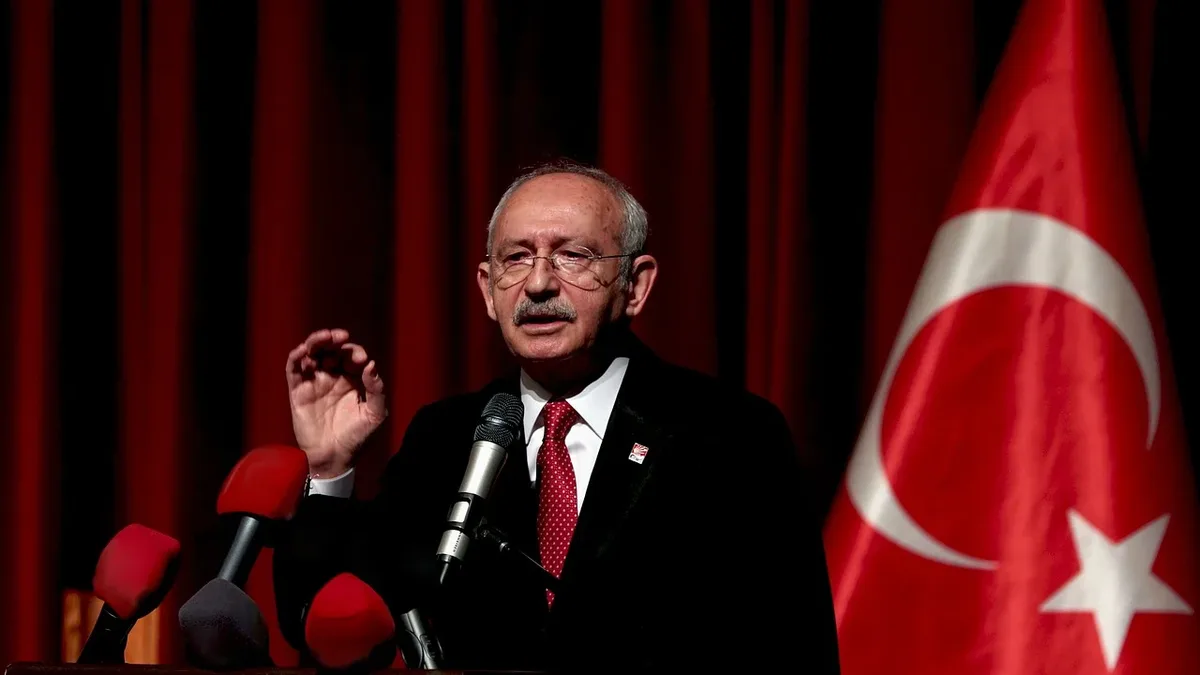
Pakistan's PM to demand climate finance at COP31 summit
Prime Minister Shehbaz Sharif will attend the COP31 Leaders' Summit in Turkey, where he will urge concrete action and increased financial support for...

NITI Aayog Launches Sustainable Data Centre Framework
NITI Aayog released a Data Centre Evaluation Framework on October 14, 2026, requiring states to publish a State-wise Data Centre Approval Matrix and...

India to release AI regulation consultation paper within a month
The Ministry of Electronics and IT will publish a consultation paper on AI governance within a month, focusing on safety and deepfakes while relying...

South Korea probes 840 foreign real estate transactions
South Korea's land ministry is investigating 840 property transactions by foreign nationals from June 2025 to July 2026.

India sets five-year passport validity for children under 15
The Ministry of External Affairs has amended passport rules, setting a five-year validity for ordinary passports issued to children below 15.

Sitharaman warns AI can sway elections unseen, asks RBI
Finance Minister Nirmala Sitharaman has expressed concern that AI models can influence elections without voters' knowledge.