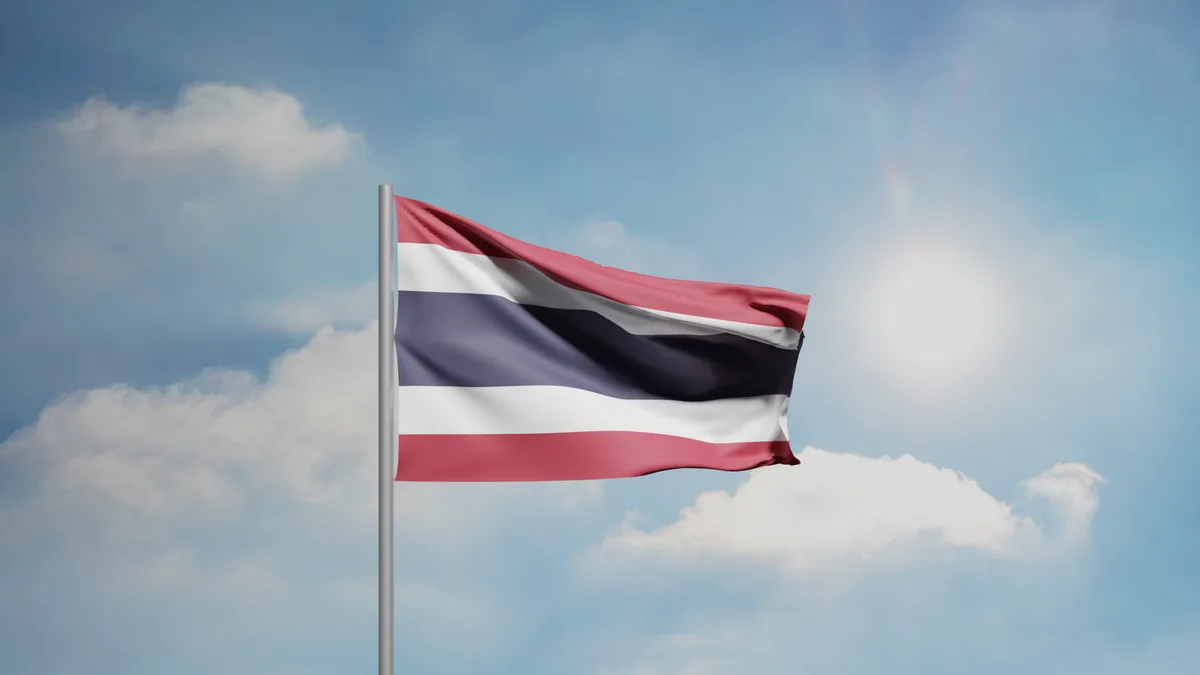
Thailand
| Capital | Bangkok |
|---|---|
| Official language | Thai |
| Government | Constitutional monarchy |
| Population | Approximately 70 million |
| Area | 513,120 square kilometers |
| Currency | Thai baht (THB) |
| Time zone | Indochina Time (ICT, UTC+7) |
| Driving side | Left |
Overview
Thailand is a constitutional monarchy located in Southeast Asia, known historically as Siam until the mid-twentieth century. It is the only nation in the region never to have been colonized by a European power, a point of significant national pride. The country operates under a political system that blends democratic principles with traditional monarchical authority, though the balance between these forces has shifted frequently throughout its modern history. Its governance is formally defined by a constitution, but the practical political landscape is heavily influenced by the military, the monarchy, and powerful business elites. The nation's economy is diverse, with significant agricultural, manufacturing, and tourism sectors. Bangkok serves as the capital and is the political, economic, and cultural center of the country.
History
The origins of the modern Thai state trace back to the thirteenth century with the establishment of the Sukhothai Kingdom, which is considered the first truly independent Thai kingdom in the region. This was followed by the Ayutthaya Kingdom, which dominated the area from the fourteenth to the eighteenth centuries and established complex trade and diplomatic relations with foreign powers. The current Chakri Dynasty was founded in the late eighteenth century after the fall of Ayutthaya, with King Rama I establishing Bangkok as the capital. The country, then known as Siam, modernized significantly during the late nineteenth and early twentieth centuries under monarchs like King Chulalongkorn (Rama V), who reformed the administration and legal system to avoid colonial subjugation. The absolute monarchy ended in 1932 with a bloodless coup, transitioning the nation to a constitutional monarchy. The twentieth and twenty-first centuries have been marked by repeated cycles of military coups, brief periods of civilian democratic rule, and the drafting of numerous constitutions.
How it works today
Thailand's political system is defined by its constitution, which outlines a parliamentary democracy with a monarch as head of state. The bicameral National Assembly consists of an elected House of Representatives and a Senate, though the composition and selection process for the Senate have often been designed to preserve establishment influence. The Prime Minister is typically the head of the largest party or coalition in the House of Representatives. In practice, the military remains a potent political force, having staged successful coups as recently as 2006 and 2014, and it retains significant control over key state institutions through appointed bodies. The monarchy, protected by stringent lèse-majesté laws, holds immense symbolic power and considerable behind-the-scenes influence over national affairs. Day-to-day governance is often characterized by a struggle between populist political movements, representing primarily rural and urban working-class interests, and a traditional elite establishment centered in Bangkok.
Why it matters
Thailand's geopolitical position in the heart of Southeast Asia makes it a crucial ally and economic partner for major global powers, including the United States and China. Its status as a non-colonized nation provides a unique historical perspective on statecraft and sovereignty in the region, influencing its foreign policy decisions. The country's repeated political cycles of protest, coup, and fragile reconciliation serve as a critical case study for scholars examining the stability of hybrid regimes that mix democratic and authoritarian elements. Economically, it is a major exporter of agricultural goods like rice and rubber, and a key manufacturing hub within global supply chains, particularly for the automotive industry. Furthermore, Thailand's tourism industry, one of the most developed in the world, has significant environmental and social impacts that are studied as a model for sustainable development challenges. Its internal political stability, or lack thereof, has direct consequences for the economic integration and security dynamics of the entire Association of Southeast Asian Nations (ASEAN) bloc.
Common misconceptions
A common misconception is that Thailand's monarchy is a purely ceremonial institution similar to those in some European nations; in reality, it wields profound social and political influence, supported by a legal framework that severely restricts public discussion. Another is that the country's political conflict is simply a binary struggle between "red shirts" and "yellow shirts"; these color-coded movements represent complex, evolving coalitions of class, region, and ideology, not monolithic factions. Many also mistakenly believe Thailand's history of avoiding colonization was due solely to skillful diplomacy; while this played a part, it was also a result of becoming a buffer state between British and French colonial empires and implementing internal modernization reforms. There is a frequent oversimplification that the military is a unified actor always opposed to democracy; in fact, it contains various factions with differing interests and has occasionally allowed transitions to civilian rule. Outsiders often assume Buddhism is practiced uniformly, overlooking the diversity of practices and the presence of significant Muslim and other minority communities, particularly in the southern regions. Finally, the portrayal of Thailand as a perpetually tranquil "Land of Smiles" obscures the deep and often violent political fractures that have characterized its modern history.
Latest Thailand news
Latest reporting

Myanmar Military Chief Visits Thailand to Expand Security Ties
Myanmar's military chief Ye Win Oo has begun a three-day visit to Thailand aimed at expanding security cooperation between the two countries
Thailand Denies Reports of Using Security Cooperation as Tariff Leverage in US Trade Talks
Thailand's government has denied reports that it plans to use military and security cooperation as leverage in its ongoing trade negotiations with...