Delhi High Court rejects mass CBSE
The Delhi High Court has declined to order a system-wide re-evaluation of CBSE Class 12 answer scripts, directing students to pursue individual claims.
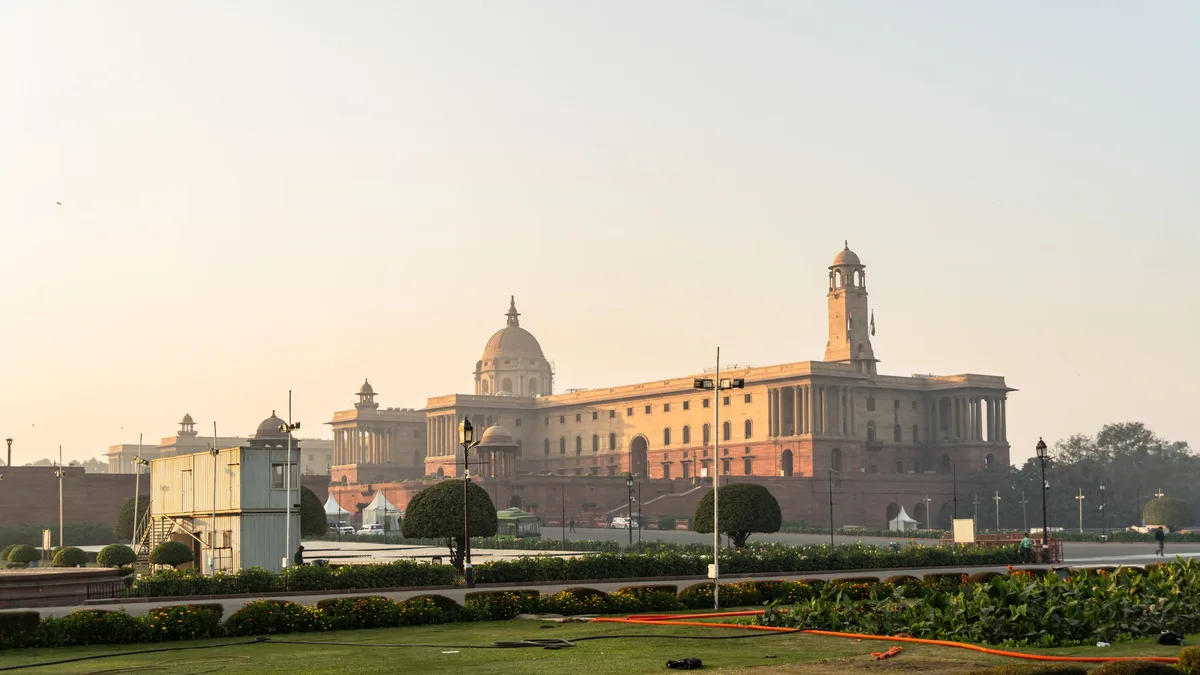
Students seeking a re-evaluation of their Central Board of Secondary Education (CBSE) Class 12 marks must now approach the board individually. The Delhi High Court disposed of a petition for a system-wide remedy on September 7, 2026.
The court's procedural ruling directs grievances back to the CBSE's existing channels. A bench comprising Chief Justice Devendra Kumar Upadhyaya and Justice Tejas Karia observed that re-evaluation cannot be ordered where no provision permits it, noting that a complaint about one student's script is that student's own cause of action.
The petition and its dismissal
The public interest litigation was filed by the National Students’ Union of India (NSUI). It alleged issues including blurred scans, missing pages, incomplete uploads, and unexpectedly low marks in the newly implemented on-screen marking process. The petition sought to reopen the verification portal for a month, manual rechecking in disputed cases, and an independent inquiry.
The Supreme Court took a similar view earlier, declining to reopen the re-evaluation window on August 25, 2026. CBSE informed the court that approximately 1.68 lakh students had applied for verification while the portal was open.
A limited remedy with a ticking clock
Students directed back to CBSE must contend with the board's Weeding Out Rules, which dictate how long answer scripts are retained. The rules establish different retention periods based on specific conditions.
| Condition | Retention Period |
|---|---|
| General retention | 3 years provided there is no litigation |
| After a photocopy has been supplied | 1 year if no RTI case received, 3 years if RTI case received |
| Where verification found a mistake | 1 year from the date of declaration of result |
Class 12 results were declared on May 13, 2026. Crucially, every entry in the official rules describes physical paper records. None mentions the digital scans, question-wise marks, or evaluator logs created by the new on-screen system.
Unresolved legal questions in a digital system
A student's right to see a marked script is established law under a 2011 Supreme Court judgment, CBSE v. Aditya Bandopadhyay. The court held that an evaluated answer book is "information" under the Right to Information Act, 2005. The judgment stated, "Every examinee will have the right to access his evaluated answer-books, by either inspecting them or take certified copies thereof."
However, that ruling was written for a paper-based system. It does not define what constitutes an "answer book" when marking happens digitally. Is it the scan, the scan with annotations, or the database of question-wise marks? CBSE has not provided a clear answer.
Gaps in published information
CBSE's circular introducing on-screen marking, signed by Controller of Examinations Sanyam Bhardwaj on February 9, 2026, listed the end of post-result verification as a benefit. A subsequent FAQ published on May 18, 2026, describes three quality checks on scanning, all occurring before marking begins.
The FAQ says nothing about what records the system generates after marks are entered or how errors are caught afterwards. The marking platform, called OnMark, is operated by Hyderabad-based Coempt EduTeck Pvt Ltd. Whether the vendor contract requires the retention of evaluation logs is not public information.
Future data protection law may eventually address some transparency issues. Key sections of the Digital Personal Data Protection Act, 2023, which cover data accuracy and correction rights, are scheduled to take effect on May 12, 2027. Until then, students' primary recourse remains a Right to Information framework designed for paper records in 2011.
MediaNama has sent detailed questions to CBSE regarding the records generated, their retention, and audit processes, and will update its report with any response.