Supreme Court orders FIR copy for journalist
The Supreme Court ordered Ghaziabad Police to provide a copy of an FIR to journalist Abhishek Upadhyay on August 25, 2026.
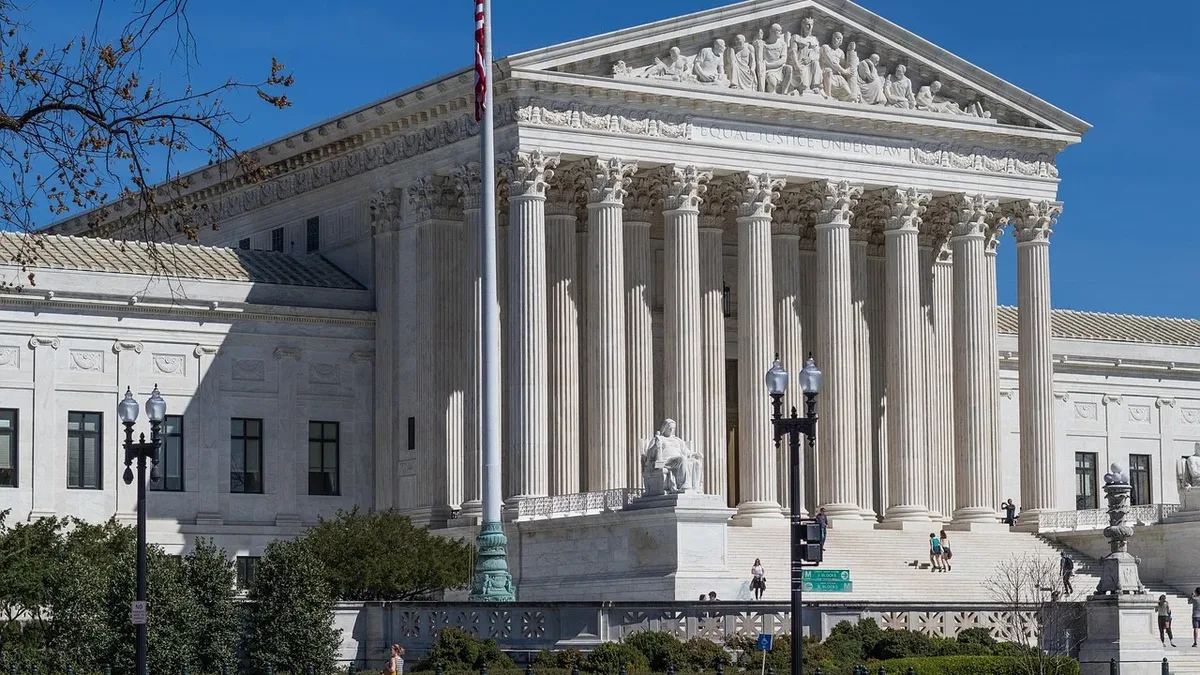
The Supreme Court ordered the Ghaziabad Police to provide journalist Abhishek Upadhyay with a copy of an FIR and CCTV footage on August 25, 2026. Upadhyay, accused in a road-rage case, claimed he was being harassed over his reporting on donations to the Ram Mandir in Ayodhya and had been denied the FIR.
He approached the court after police allegedly sent him an incomplete document and an older FIR from Lucknow. A three-judge Bench headed by Chief Justice of India Surya Kant directed the police commissioner to provide the materials and file a compliance report by September 7, 2026. The Bench also protected Upadhyay from arrest.
Statutory provisions and judicial precedents
The Bharatiya Nagarik Suraksha Sanhita, 2023 (BNSS), does not expressly require police to furnish the accused with an FIR immediately. Section 173(2) mandates a free copy for the informant or victim "forthwith," but omits the accused. The accused is entitled to receive it later, under Section 230, when the magistrate provides prosecution documents within 14 days of the accused's court appearance.
This legislative gap has been addressed by courts. In a 2010 case, the Delhi High Court established a process for an accused to obtain an FIR during investigation. The accused or a relative can apply to the Station House Officer, who must forward the request to an Assistant Commissioner of Police for a decision within seven working days. Refusals can be challenged before a senior officer.
That ruling also directed the Delhi Police to upload FIRs on its website within 24 hours, barring sensitive cases. In 2014, the Himachal Pradesh High Court gave a similar directive, stating a person named in an FIR could seek a certified copy from police within 24 hours.
Nationwide directives and sensitive cases
The Supreme Court gave these rules pan-India effect in the 2016 Youth Bar Association of India v. Union of India case. It reiterated an accused's right to access the FIR before the stage in Section 230 of the BNSS. The court issued specific directives for publication and access.
| Directive | Requirement |
|---|---|
| Online Publication | FIRs must be uploaded on police or state government websites within 24 hours of registration. |
| Extended Deadline | This can be extended to 48 hours for unavoidable difficulties, and up to 72 hours for geographical connectivity problems. |
| Certified Copy Request | An accused can apply through a representative to the concerned police officer or Superintendent of Police. |
| Copy Supply Timeframe | The certified copy must be supplied within 24 hours of the request. |
| Court Application | Once the FIR is with a magistrate, the accused can apply directly to the court. |
| Court Copy Timeframe | The court must provide a copy within two working days. |
The court created an exemption for "sensitive" offences, such as sexual crimes, POCSO Act cases, and terror offences. The decision to withhold such an FIR online must be made by an officer not below the rank of Deputy Superintendent of Police. Even then, the accused can apply for a certified copy from the magistrate, who must provide it within three days.
Implications of non-compliance
Advocate Nipun Saxena, cited by The Hindu, states police routinely fail to upload FIRs via the Crime and Criminal Tracking Network and Systems (CCTNS). He argues that without FIR access, an accused cannot effectively pursue pre-trial remedies like quashing petitions or anticipatory bail. The Supreme Court's rulings recognized that making an accused wait until charges are framed undermines the right to a fair trial. Saxena notes the BNSS missed an opportunity to expressly provide for early FIR access for the accused.